How to Store Fall Decorations So They Last
An end-of-season routine for handmade fall decor: sort, clean and dry, then pack wreaths, fabric pumpkins, garlands and pinecones in the right containers.
Knowing how to store fall decorations properly is what lets a handmade wreath or a set of fabric pumpkins come out next September looking the way it went in. Most damage does not happen on the porch or the mantel. It happens in the box: crushing, damp, dust and the occasional insect.
An end-of-season routine takes an afternoon. Sort first, clean and dry everything, then give each type of material the container it needs.
Sort Into Keep, Repair and Compost
Clear a table and bring every piece of fall decor to it. Make three piles.
- Keep: pieces in good shape that you would happily put out again.
- Repair: a wreath with loose pinecones, a garland with a broken tie, a pumpkin with a wobbly stem.
- Compost or discard: real produce, crumbling leaves, anything damp, moldy or brittle beyond saving.
Do the repairs now, while the glue gun is out and you remember what broke. A low-temperature glue gun still burns skin, so keep fingers clear of the nozzle and fresh glue.
Real Pumpkins and Gourds: Do Not Store Them
Real pumpkins, gourds and fresh leaves are perishable. They often last a few weeks in cool, dry conditions, but they will not keep in a bin until next year, and a single soft pumpkin can spoil everything packed beside it.
Compost uncarved, unpainted pumpkins and gourds if you have a compost pile or a local collection that accepts them. Painted, glued or sealed pumpkins go in the household trash, since the coatings do not belong in compost. They are decoration only and are not for eating afterward. Before composting, pull off ribbon, wire, pins and glued-on pieces.
Clean and Dry Everything First
Dust and moisture are the two things you do not want to seal into a container.
- Take each piece outdoors and shake it gently, or brush it with a soft, dry paintbrush.
- Wipe hard surfaces such as craft pumpkins, jars and wooden signs with a barely damp cloth, then dry them.
- Spot-clean fabric and felt with a damp cloth rather than soaking them.
- Lay everything out indoors for a day or two so any trace of moisture can leave.
- Remove batteries from flameless LED candles and battery string lights, and store the batteries separately so they cannot leak inside the decor.
Storing Wreaths: Flat or Hung
A wreath keeps its shape in one of two positions: lying flat with nothing on top of it, or hanging freely.
- Flat in a box. Choose a box a little wider than the wreath, line it with tissue paper and lay the wreath face up. Tuck loosely crumpled tissue into the center and around the bow so the loops do not flatten.
- Hung in a bag. A round zip wreath bag with a hanger loop lets the wreath hang from a closet rod or a wall hook. The weight sits on the frame, not on the decorations.

Never stack two wreaths directly on each other. Heavier pieces such as a pinecone wreath do best flat in their own box, because cones can snap off under their own weight if the wreath swings.
Fabric Pumpkins, Felt and Garlands
Fabric and felt need air. Sealed in plastic with a little trapped humidity, they can pick up a musty smell or mildew spots. Use a cardboard box, a cotton bag or a fabric storage bin, and wrap pieces in plain tissue paper.
Pack fabric pumpkins in a single layer where you can, stems up, without pressing the lid down on them.
Garlands tangle when they are dropped loosely into a bin. Wind each one around a flat piece of cardboard about 8 by 12 inches (20 by 30 cm), or coil it loosely and slip it into its own bag. Paper garlands store best flat between two sheets of cardboard.
Pinecones, Acorns and Dried Stems
Natural materials are the exception to the breathable rule. They are best kept in a sealed bin with a tight lid, which keeps humidity and pantry pests out, as long as everything is completely dry before it goes in.
- Brush off dirt and let the materials air-dry indoors for several days.
- Check each piece for insects, tiny holes, fine dust or webbing. Discard anything doubtful.
- Pack pinecones and acorns loosely in the bin. Lay wheat and dried stems flat on top, or in a long box of their own.
- Look inside once or twice during the year. If you see insects or mold, throw out the affected pieces and wipe the bin.
Pressed and preserved leaves are fragile in a different way. Keep them flat between sheets of paper inside a book or a folder, and see how to preserve fall leaves if you want next year’s batch to last longer.
Storage by Item Type
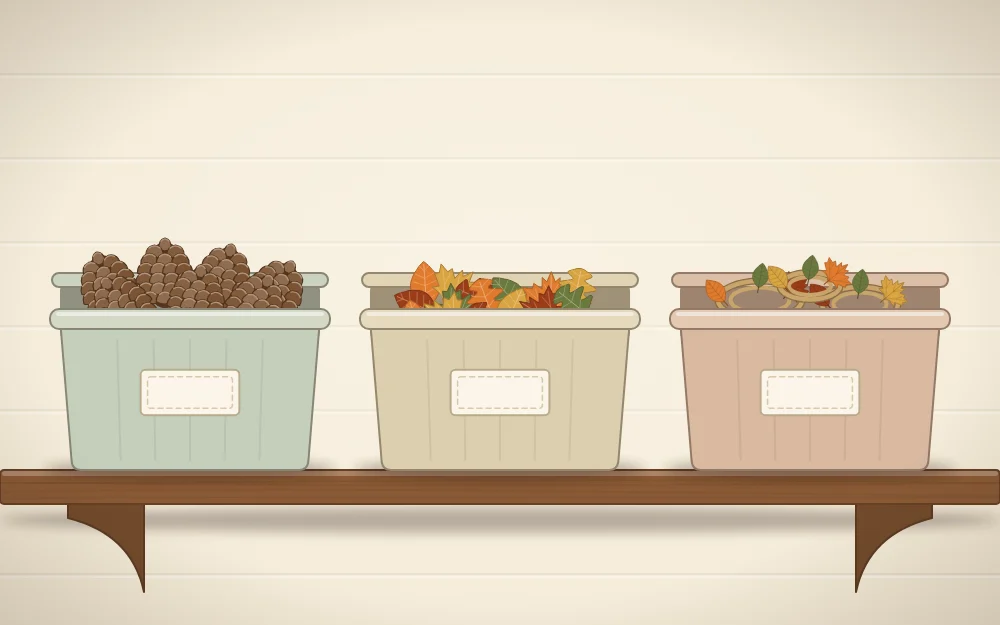
| Item | Container | Position | Watch for |
|---|---|---|---|
| Wreaths | Wreath box or zip wreath bag | Flat, face up, or hanging | Crushed bows, stacking |
| Fabric pumpkins and felt | Cardboard box or cotton bag | Single layer, stems up | Damp, moths |
| Garlands and banners | Box or bag, one per garland | Wound on cardboard or coiled | Tangles, creases |
| Pinecones, acorns, dried stems | Sealed bin with tight lid | Loose, stems flat on top | Insects, moisture |
| Craft pumpkins and jars | Lidded bin with padding | Upright, heaviest at the bottom | Chipped paint |
| Real pumpkins and gourds | None | Compost or dispose | Do not store |
Label the Bins
A label saves you from opening six containers to find one garland. Write the contents and the room on a tag or a strip of masking tape and stick it on the short end of the bin, the side that faces out on a shelf.
Be specific: “mantel garland, 6 ft (1.8 m), plus LED lights” tells you more than “fall.” Put fragile bins on top and the heaviest ones at the bottom of the stack.
Choose a Cool, Dry Place
Where the bins sit matters as much as what is in them. An interior closet, a shelf under the stairs or the space under a bed gives steady temperatures and low humidity. Attics that get very hot can soften glue and fade fabric, and damp basements invite mildew, so use those spaces only if yours stay dry and moderate.
Keep stored decor away from heat sources such as a furnace, water heater or space heater, and lift bins off a concrete floor on a shelf or a couple of boards.
Frequently asked questions
Can I store real pumpkins and gourds for next year?
It is not worth trying. Real pumpkins and gourds are perishable and will soften and mold in storage, which can ruin the decor packed around them. Compost plain, unpainted ones where that is accepted and put painted or glued ones in the trash. Craft pumpkins are the ones to pack away.
Should fall decorations go in plastic bins or cardboard boxes?
It depends on the material. Fabric, felt and paper do better in breathable cardboard or cotton, because trapped humidity can cause mildew. Fully dried pinecones, acorns and stems are better in a sealed plastic bin that keeps moisture and insects out. Check sealed bins once or twice during the year.
Where is the best place to keep fall decor in the off season?
A cool, dry spot with steady temperatures, such as an interior closet or under a bed. Very hot attics can soften glue and fade fabric, and damp basements encourage mildew. Wherever you choose, keep the bins away from a furnace, water heater or other heat source.