Fall Tablescape Ideas: How to Build a Table in Layers
Build a fall table in five layers, from base cloth to flameless lighting, with three style palettes, space for serving dishes and a 10-minute weeknight version.
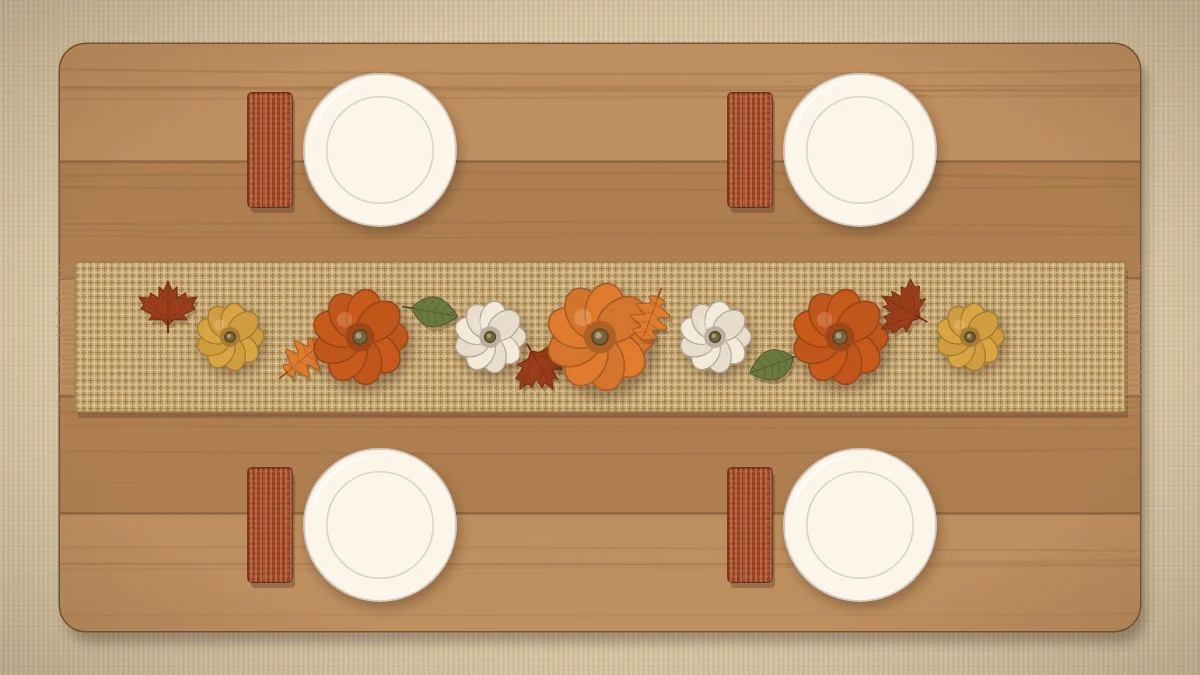
Most fall tablescape ideas look complicated because you see the finished table all at once. Built in order, a table is just a few layers stacked from the surface up: a base, a line down the center, the place settings, a handful of small accents and some soft light.
The order matters more than the objects. Work through the layers below with whatever pumpkins, leaves and linens you already have, and you will end up with a table that looks planned and still has room for dinner.
The Five Layers, in Order
- Base layer: bare wood, a tablecloth or a runner.
- Centerpiece line: the main decor, running along the middle of the table.
- Place settings: plates, napkins and glasses.
- Scatter accents: a few small pieces that tie the center to the settings.
- Lighting: battery LED candles or battery string lights only.
Set each layer completely before starting the next. It is much easier to fit plates around a centerpiece than to squeeze a centerpiece between plates.

Layer 1: The Base
The base sets the mood before anything else goes down. You have three honest options.
- Bare wood. Warm and casual. It suits a table with a good surface and keeps cleanup simple.
- A full cloth. Cream, oatmeal or soft gray linen hides a worn table and makes orange and rust stand out.
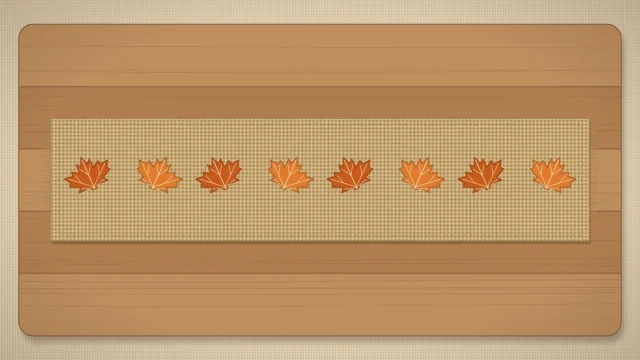
- A runner. A strip of color down the middle that also marks exactly where the centerpiece goes.
A runner is usually about 12 to 14 inches (30 to 36 cm) wide and looks best when it hangs over each end by roughly 6 inches (15 cm). You can make one from burlap or drop cloth with this no-sew table runner method.
Layer 2: The Centerpiece Line
On a rectangular table, a line works better than a single large arrangement. Start with the tallest piece in the middle, add medium pieces on each side and finish with the smallest at the ends, so the line tapers.
Two measurements keep the line practical. Keep it within the width of the runner, about 12 inches (30 cm), so plates and glasses fit on both sides. Keep most of it under about 12 inches tall as well, so guests can see each other across the table.
Odd numbers of the larger pieces, three or five pumpkins rather than four, tend to look more natural. Fill the gaps with leaves, pinecones or wheat stems rather than more large objects. For specific arrangements to drop into this layer, see these DIY fall centerpiece ideas.
Layer 3: Place Settings
Each setting needs about 24 inches (61 cm) of table edge to feel comfortable. Measure once, mark the centers of the plates with your eye, and set the plates first. Then add napkins, then glasses.
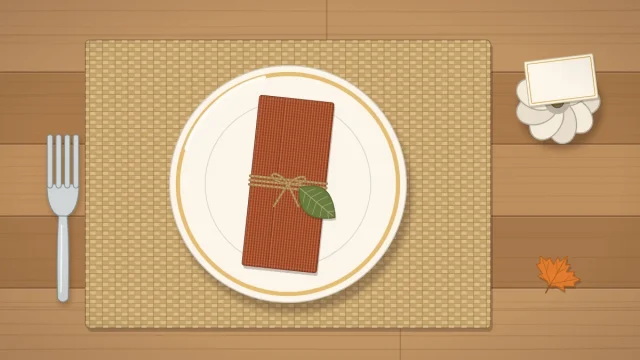
Let the napkin carry the color. One napkin shade repeated at every seat connects the settings to the centerpiece far better than a mix of colors.
Layer 4: Scatter Accents
Scatter accents are the small pieces that close the gap between the center line and the plates: a few acorns, mini pinecones, single leaves or one tiny pumpkin per setting. Use them sparingly. Roughly three to five small pieces for each place is plenty, and half of that on a narrow table.
Keep loose natural bits out of the path of serving dishes and off the plates themselves. Small pieces such as acorns stay out of reach of small children and pets.
Layer 5: Lighting
Light is what turns a decorated table into a cozy one, and on a table full of dried leaves, wheat and burlap it needs to be flameless. Use flameless LED candles in two or three heights, grouped in the center line, or weave a strand of battery string lights through the leaves and tuck the battery pack under a pumpkin.
Safety note
Dried leaves, wheat, pinecones, paper and burlap burn easily, so use flameless LED candles or battery string lights on the table instead of real candles. Keep the whole arrangement away from any heat source, including warming trays.
Three Styles and Their Palettes
The layers stay the same in every style. Only the materials and colors change.
| Style | Palette | Base | Center line |
|---|---|---|---|
| Rustic harvest | Pumpkin orange, rust, mustard, bark brown | Bare wood with a burlap runner | Mixed pumpkins, wheat, pinecones and leaves |
| Soft neutral | Cream, oatmeal, sage, pale gold | Linen cloth or cream runner | White and pale green pumpkins with dried grasses |
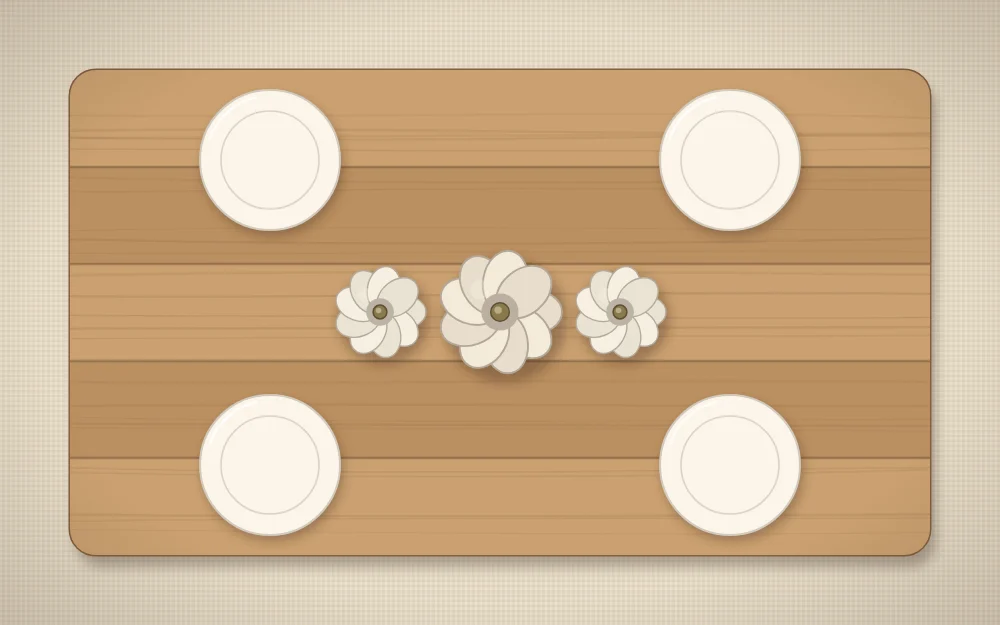
| Modern minimal | White, cream and one accent such as rust | Bare wood, no runner | Three white pumpkins in a straight line |
If you are unsure which colors to combine, pick two main colors and one accent, and repeat them in every layer. These fall color palette ideas give ready-made combinations.
Leave Room for Serving Dishes
A table that looks perfect empty can fail the moment food arrives. Decide before you decorate how the meal will be served.
- Dishes on the table: break the centerpiece line into two or three shorter groups with gaps wide enough for a platter, roughly 12 to 14 inches (30 to 36 cm) each.
- Buffet or sideboard service: the center line can run nearly the full length of the table.
- A mix of both: build the decor on trays or boards so a whole section lifts away in one move.
Tip
Set your largest serving dish on the table while you arrange the centerpiece. If it does not fit now, it will not fit later.
The 10-Minute Weeknight Version
You do not need all five layers on an ordinary evening. This short version uses three.
- Lay a runner, or a folded length of fabric, down the center of the bare table.
- Line up three pumpkins or gourds in the middle, largest in the center.
- Tuck a few leaves or pinecones between them.
- Add one or two flameless LED candles and switch them on.
- Set plates and one colored napkin at each seat.
Leave the center line in place between meals and refresh it as real pumpkins and fresh leaves fade. They are perishable and often last a few weeks in cool, dry conditions, so check them every few days and replace anything that softens.
Frequently asked questions
What order should I decorate a fall table in?
Work from the surface up. Lay the base cloth or runner, arrange the centerpiece line, set the plates, napkins and glasses, add a few small scatter accents and finish with battery LED lighting. Completing each layer before starting the next stops you from having to move things twice.
How tall should a fall centerpiece be?
For a table where people sit facing each other, keep most of the centerpiece under about 12 inches (30 cm) so guests can see across it. One taller piece in the middle is fine if it is slim. Sit in a chair and check the sightline before you finish.
How do I decorate a table and still fit the food?
Decide how the meal will be served first. If dishes go on the table, split the center line into shorter groups with platter-sized gaps, or build the decor on trays so a section lifts off. If food is served from a sideboard, the line can run almost the full length.