Wheat and Corn Husk Decor: Bundles, Sheaves and Door Hangers
How to decorate with dried wheat, grasses and corn husks: a standing sheaf, a flat door bundle, husk bows and flowers, a wrapped jar, and the habits that keep brittle stems tidy and dry.
Few materials say harvest as quickly as a handful of golden stems. Wheat decor is light, inexpensive to put together and almost entirely free of tools: most projects need only scissors, twine and a ribbon. Add a bag of dried corn husks and you have enough for a door, a shelf and a table.
The trade-off is that dried stems are brittle and shed a little, so a few handling habits matter more than skill. This guide covers where to get your materials, four simple projects, and how to keep everything dry and tidy through the season.
Buying craft wheat versus gathering your own
Bundles of dried wheat sold for crafts and floral work are the easy route. They arrive cleaned, evenly dried and cut to a similar length, usually with long stems that are simple to tie.
Gathering is possible too, but only with permission. A wheat field is somebody’s crop, so ask before you take anything, and collect ornamental grasses and seed heads only where it is allowed. Cut on a dry day, shake the stems outdoors, brush off any dirt, then hang them upside down in small bunches indoors for about one to two weeks. Check them for insects before they come near your decor.
Corn husks are simplest to buy dried from the grocery aisle, where they are sold for cooking. They are clean, flat and a soft cream color that suits every fall palette.
Handling brittle stems and stiff husks
Dry wheat snaps if you bend it sharply. Hold a bundle near the heads rather than at the cut ends, and work over a tray or an old sheet so loose bits are easy to gather up. If stems need to flex, for example to fan out a sheaf, mist them lightly with water and wait a few minutes. They stiffen again as they dry.
Husks are the opposite problem: they are too stiff to fold when dry. Soak them in a bowl of warm tap water for roughly 10 to 20 minutes until they feel like damp paper, then pat them with a towel. Tear them along the grain into strips; they split in straight lines without scissors. Shape them while damp and let the finished piece air-dry completely before you display it.
How to make a standing wheat sheaf
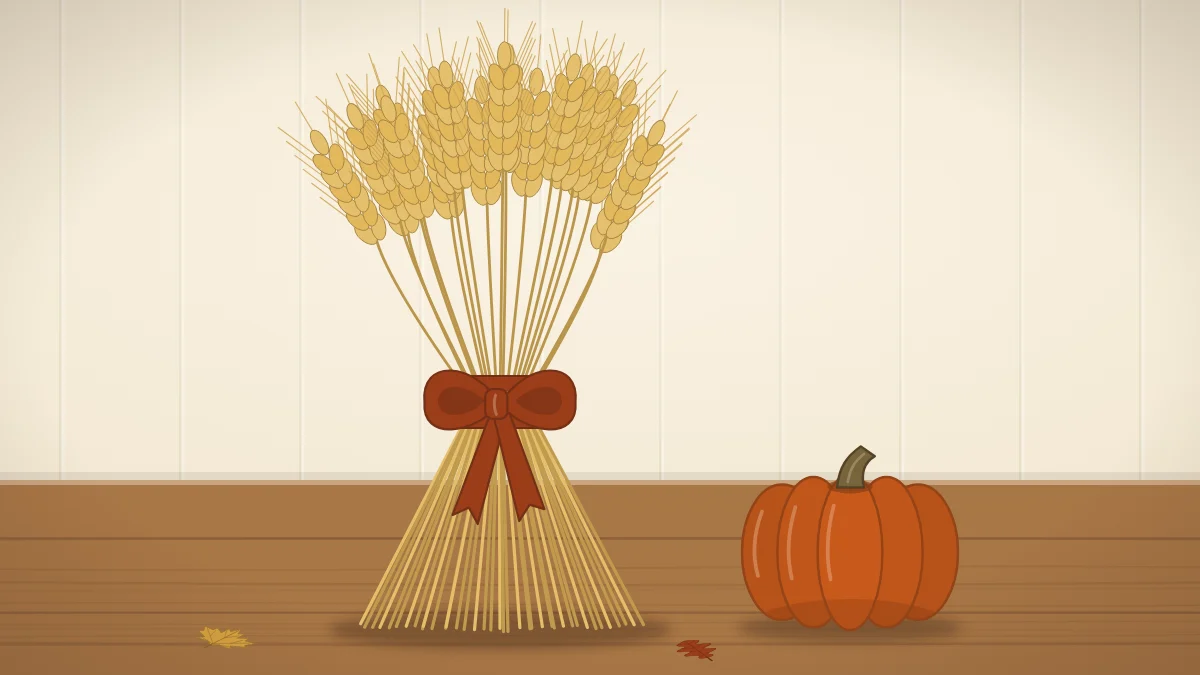
A sheaf is a bundle that stands on its own cut ends. It works on a mantel shelf, a sideboard or beside the pumpkins in your fall entryway decorations.
- Plan on roughly 80 to 120 stems for a sheaf about 4 inches (10 cm) thick at the tie. Thin bundles tend to topple.
- Gather the stems with all the heads level, then tap the heads gently on your palm to even them out.
- Wrap a rubber band tightly around the bundle just under halfway down from the heads.
- Trim the cut ends straight across with sharp scissors so the base is flat. A finished height of about 14 to 18 inches (36 to 46 cm) is easy to place.
- Hold the banded middle and twist the bundle a quarter turn while pressing down on a table. The stems splay into a skirt at the bottom and a spray at the top, which is what lets it stand.
- Cover the rubber band with twine, then tie a wide ribbon over it and finish with a simple knot or bow.
A flat wheat bundle for the door
A door bundle hangs flat, so it needs fewer stems, roughly 40 to 60. Lay them on the table in a loose fan instead of a round bunch, with the longest stems in the center and shorter ones stepping down at each side. Bind the stems with floral wire about a third of the way along, leaving a wire tail to twist into a hanging loop at the back.
Tie a bow over the wire, and hang the bundle with the stems pointing up for a slightly more modern look.
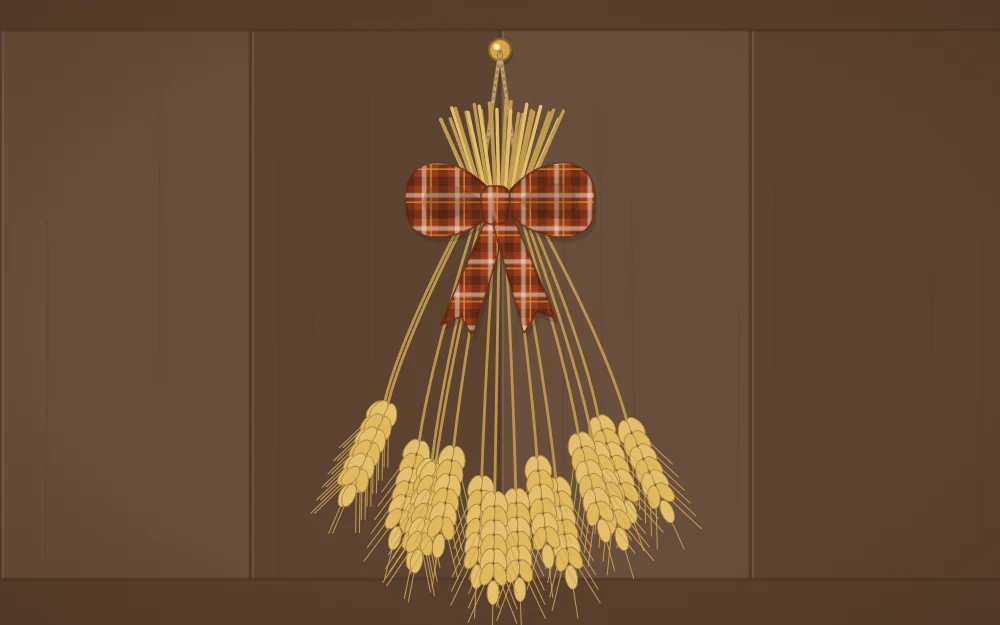
Hang it from a removable adhesive hook or an over-the-door hanger, and choose a door that is sheltered from rain. Wheat that gets wet and stays damp can turn gray and moldy.
Corn husk bows and flowers
For a bow, take three damp husk strips about 1 inch (2.5 cm) wide. Fold two into loops, pinch the ends together in the middle, and lay the third strip under them as tails. Wrap a narrow strip around the center and tie it with thin twine at the back.
A flower uses the same loop. Fold roughly eight to ten strips in half without creasing them, and glue the pinched ends in a circle on a small cardboard disc using tacky craft glue or a low-temperature glue gun. A low-temperature glue gun still burns skin, so press the husks down with a craft stick, not a fingertip. Add a second, smaller ring of loops on top, then cover the middle with a button, a wooden bead or a coiled strip of husk.
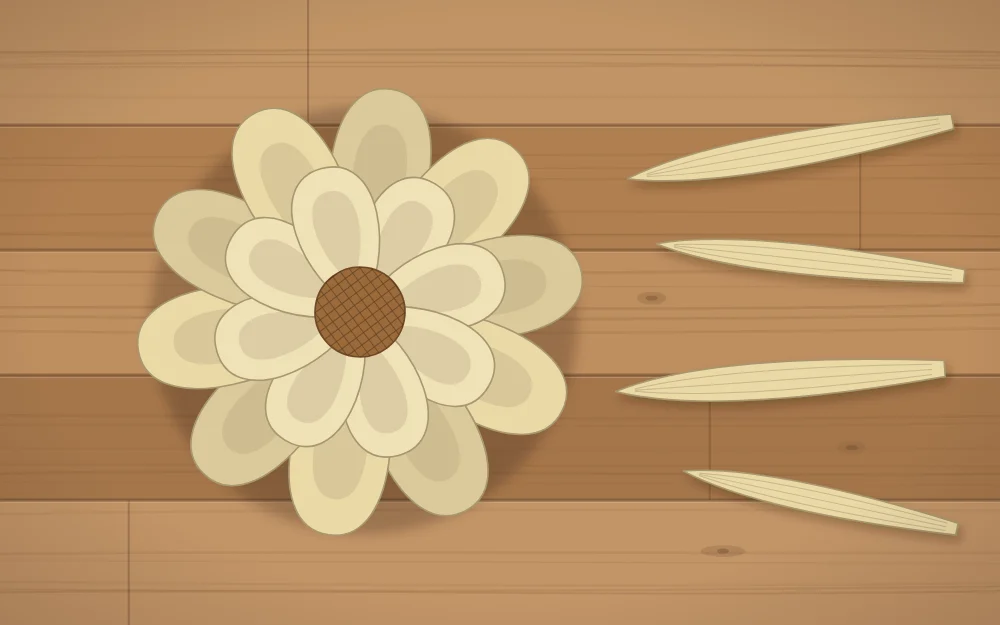
Husk flowers look good tucked into the opening of a paper and burlap cornucopia alongside your wheat.
A husk-wrapped jar
Stand damp husks upright around a clean jar with the pointed tips at the top, overlapping each one slightly. Hold them in place with a rubber band, adjust until the glass is covered, then tie twine or raffia over the band. Trim the bottom edges level so the jar sits flat. Once dry, the husks hold their curve and the jar becomes a rustic vase for a small bunch of wheat.
Keeping dried bundles dry, tidy and away from heat
Safety note
Dried wheat, grasses and corn husks catch light very easily. Keep every bundle well away from heaters, stoves, fireplaces and any flame, and use only flameless LED candles or battery string lights anywhere near them.
Some shedding is normal. A light mist of unscented hairspray or clear acrylic sealer helps hold the heads together; spray outdoors, follow the label and let the bundle dry before bringing it in.
Kept dry and out of direct sun, wheat often lasts for more than one season, though the color slowly fades. When fall is over, wrap bundles loosely in paper and follow the steps for storing fall decorations so they come out in good shape next year.
Frequently asked questions
How long does dried wheat last as decor?
Dried wheat that stays dry and out of direct sun often lasts for more than one season, although the gold color fades slowly and the heads shed a little more each year. Damp air shortens its life, so display it indoors or on a sheltered door and pack it away loosely wrapped in paper.
How do I stop wheat from shedding everywhere?
Handle bundles near the heads, work over an old sheet, and avoid bumping them once they are in place. A light mist of unscented hairspray or clear acrylic sealer, applied outdoors following the label, helps hold loose bits. Some shedding is normal, so a quick sweep under the display now and then is part of the deal.
Do corn husks need to be soaked before crafting?
Yes. Dry husks crack when folded, so soak them in warm tap water for roughly 10 to 20 minutes until they bend like damp paper, then pat them with a towel. Shape them while damp and let the finished bow, flower or jar wrap air-dry fully before displaying it, which helps prevent mold.