Acorn Crafts: Easy Fall Decor with Real and Felt Acorns
How to collect, sort and air-dry acorns and caps, why the caps are the part to rely on, and five small projects: felt-ball acorns, painted acorns, garland accents, a filled jar and a napkin tie.

Acorn crafts are small by nature, which is their charm. A handful of caps and a few scraps of felt are enough for a dish of colorful acorns, a jar for the shelf or a tie for a napkin, and none of it takes more than an evening.
The trick is knowing which part of the acorn to rely on. The nut is unpredictable; the cap is not. Once you work with that, the projects below come together easily.
Collecting and Sorting Acorns
An acorn is the nut of an oak tree, and in a good year the ground under one tree supplies more than you can use. Collect only where it is allowed. Your own yard or a friend’s is simplest; many parks and reserves ask you to leave natural materials where they fall. Take a modest amount and leave plenty behind for wildlife.
Pick up caps and nuts separately, since most will have parted company already. Sort them at home into three groups:
- Caps: keep any that are whole and firm, with or without a stem.
- Sound nuts: smooth, heavy for their size, with no cracks.
- Rejects: anything with a small round hole, a split shell, a soft spot or mold. Leave these outdoors.
Air-Drying Before You Craft
Wipe off dirt with a dry cloth or a soft brush. Spread caps and nuts in a single layer on a tray lined with newspaper and leave them in a dry indoor spot with some air movement for several days, and up to two weeks for whole nuts. Turn them once or twice.
Check the tray every day or two. A small hole that appears in a nut, or fine dust beneath it, means an insect was inside; put that nut back outdoors. No heat is needed at any stage, only time and dry air.
Why the Caps Are the Reliable Part
Whole nuts change as they dry. They shrink, so caps that fitted snugly fall off. Shells can split or wrinkle, and the color often dulls from glossy brown to a flat tan.
Caps are woody and stable. They keep their shape and texture, they take glue well, and they store from one year to the next in a dry box. For that reason, most acorn crafts that last use the real cap and replace the nut with something else, usually felt.
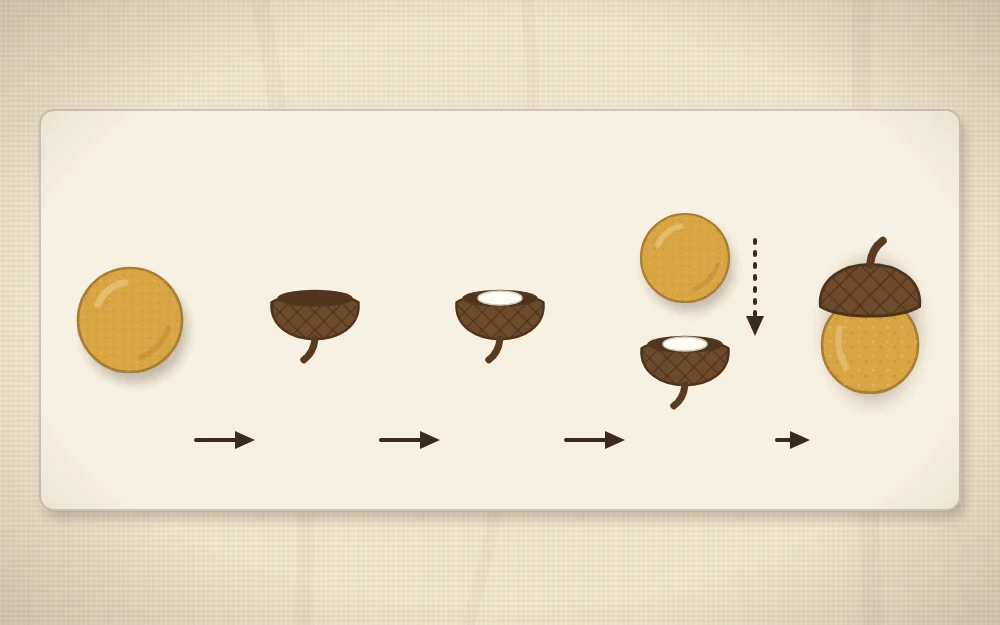
If you do want whole natural acorns, glue the caps back on. Put a small dot of tacky craft glue inside the cap, press the dried nut in and hold for a few seconds. A cap from a different acorn is fine as long as the size is close.
Felt-Ball Acorns in Real Caps
This is the project most people picture: a soft ball of color sitting in a rough natural cap. Wool felt balls about 0.5 to 0.75 inch (1.3 to 2 cm) across fit the caps of most common oaks.
- Match each ball to a cap. The ball should sit about one third of the way into the cap.
- Put a dot of tacky craft glue, or a small dab from a low-temperature glue gun, inside the cap.
- Press the ball in and hold it for several seconds. If it is a little large, pinch it into a slight oval first.
- Stand the acorns cap-down in an egg carton until the glue has set, following the time on the label.
A low-temperature glue gun can still burn skin, and the caps are small, so use the tip of a toothpick to place the glue and keep fingers clear.
Painted Acorns in a Dish
Sound, fully dried nuts can be painted for a small bowl display. Hold the acorn by its cap and brush acrylic craft paint over the nut only, leaving the cap natural. Two thin coats cover better than one thick one; let each dry as the paint label directs.
Stand the acorns upright in a lump of modeling clay or the holes of an egg carton while they dry. For a softer look, paint only the lower half, or add a band of metallic gold around the widest part. A shallow dish about 5 inches (13 cm) across holds roughly 20 to 25 acorns in a single mounded layer.
Acorn-Cap Garland Accents
Caps with a stem are easy to add to a strand you already have. Tie a 6 inch (15 cm) piece of thin twine or embroidery thread around the stem, add a dot of glue to the knot, and tie the other end to your garland so the acorn hangs just below the line.
For caps without stems, glue a small loop of thread into the cap before you press in the felt ball. Spaced every 8 to 10 inches (20 to 25 cm) along a leaf or pom-pom garland, the acorns add weight and a little movement without changing the overall look.
An Acorn-Filled Jar
A clear jar of acorns is about as quick as decor gets. Use a clean, dry jar, pour in dried acorns and loose caps, and tie twine around the neck in a simple bow. A pint jar takes roughly two cups of acorns, so mix in felt acorns or small cones from your pinecone crafts if you are short.
Leave the lid off or loose so no moisture is trapped, and tip the contents out to check them every week or two. Layered fillers and other jar projects are covered in the guide to mason jar fall decor.

A Twig-and-Acorn Napkin Tie
For the table, cut a piece of twine about 18 inches (46 cm) long. Roll a cloth napkin, lay a slim twig about 4 inches (10 cm) long on top and wrap the twine twice around both. Tie a knot, then tie one or two felt acorns to the loose ends by their stems or thread loops.
A pressed oak leaf tucked under the twine finishes it; the methods in how to preserve fall leaves keep leaves flat and usable for this. Keep the tie on the napkin and off the plate, and brush away any loose bits before the meal.
Safety note
All of these projects are decorative only. Acorns, caps and felt balls are small enough to swallow, so keep them out of reach of small children and pets, and do not treat craft acorns as something to eat.
Frequently asked questions
How do I dry acorns for crafts?
Wipe them clean, spread them in a single layer on a paper-lined tray and leave them in a dry indoor spot for several days, or up to two weeks for whole nuts. Turn them occasionally and remove any that develop holes, cracks or mold along the way.
Why do acorn caps fall off?
The nut shrinks as it loses moisture, so the cap no longer grips it. This is normal. Once the nut is fully dry, put a small dot of tacky craft glue inside the cap and press the nut back in. A cap from another acorn of similar size works too.
What size felt balls fit acorn caps?
For the caps of most common oaks, felt balls about half an inch to three quarters of an inch across are a good fit. Caps vary a lot between trees, so sort them by size first and pinch a slightly large ball into an oval before gluing.