Fall Entryway Decorations: A Simple Front Door Setup
Build a welcoming fall entry in three zones: the door, the floor and the sides. Includes pumpkin grouping, doormat layering, weather advice and a compact apartment-door version.
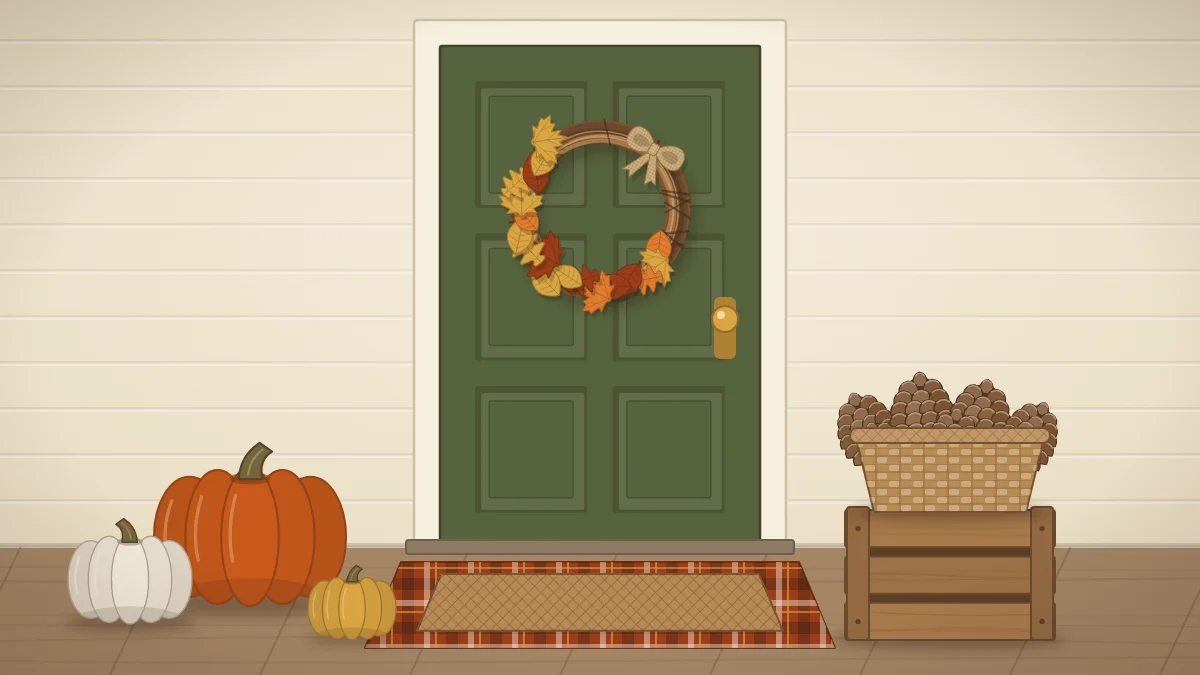
The front door is where the season starts, and it does not take much to make it feel welcoming. The simplest fall entryway decorations follow one plan: something on the door, something low beside it, and something tall at the side. Get those three right and a handful of pumpkins looks like a finished porch.
This setup scales in both directions. It works on a wide farmhouse porch, a single concrete step or an apartment door on a shared hallway, and it leans on things you can make yourself.
Think in three zones
Stand at the curb or the end of the hall and look at your door as a visitor would. You will see three areas: the door itself at eye level, the floor to one or both sides, and the vertical space beside the frame. Each zone gets one main idea, and the three should share a color palette so they read as a set.
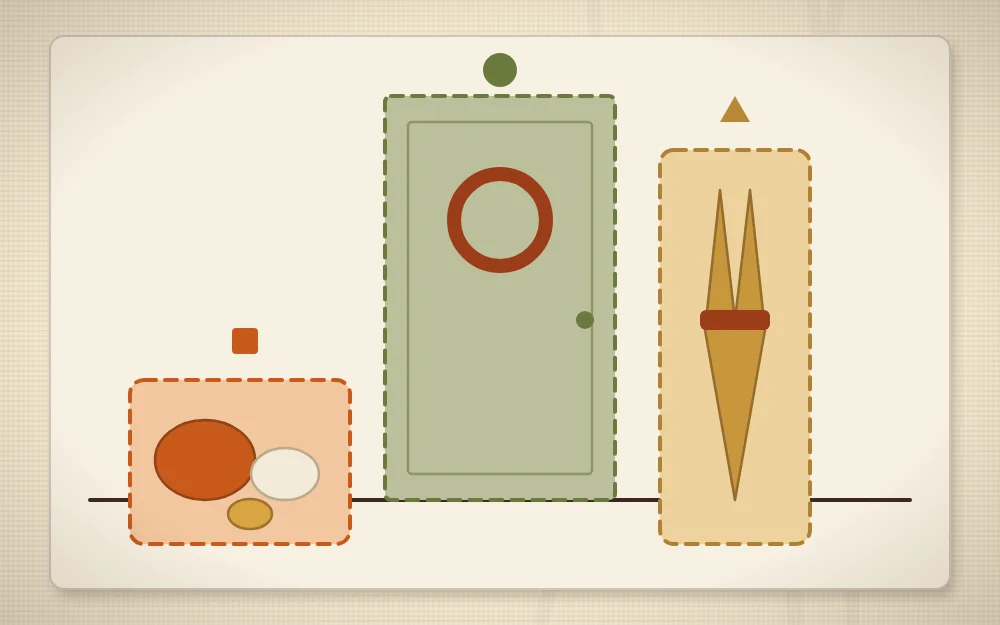
Before placing anything, sweep the area and note which way the door swings, where the handle and bell are, and where people actually step. Those spots stay empty.
Zone one: the door
A wreath is the classic choice, hung so its center sits at about eye level. For most standard doors a wreath roughly 18 to 22 inches (46 to 56 cm) across looks in proportion; smaller ones can seem lost unless the door has a window that frames them. If you have not made one before, how to make a fall wreath covers the base, the layout and the hanging loop.
A flat bundle of dried wheat tied with a bow is a quicker alternative with a slimmer profile, which helps if a storm door closes over it. The guide to wheat and corn husk decor shows how to bind one so it hangs flat.
Hang either one from an over-the-door hanger or a removable adhesive hook rated for the weight, and add a small felt pad behind it if it taps the door when it opens.
Zone two: the floor
This is where pumpkins go, and the trick is to group them instead of lining them up. Use odd numbers, three or five, and mix sizes and shapes: one large, one or two medium, and a couple of minis. Put the group on the hinge side of the door so nothing blocks the handle.
Add height with a crate or stool
Pumpkins sitting directly on the ground all end up at the same level. Lift part of the group on an upturned wooden crate, a low stool or a sturdy plant stand, and step the rest down around it. A stack of two crates gives you three levels from very little.
Layer the doormat
Place a larger flat-woven outdoor rug, often a plaid or stripe, under your regular coir mat so a border of pattern shows on all sides. A rug about 3 by 5 feet (0.9 by 1.5 m) under a standard mat is a common pairing. Check that both lie completely flat with no curled corners.
Real pumpkins left plain will sit happily next to decorated ones. For color that matches your wreath, the painted pumpkin ideas guide has stripes, dots and color-blocked halves that suit an entry.
Zone three: the sides
The side zone is about height and texture. A tall bundle of dried corn stalks, bare branches or ornamental grass tied to a porch post or leaned in a corner frames the door and draws the eye up. Tie it at two points with twine or a strap so wind cannot pull it over.
At the base, add a basket of pinecones, a galvanized bucket of branches or a wooden crate turned on its side with a pumpkin inside. If you gather cones or branches yourself, collect only where it is allowed, brush them off and check them for insects before they come near the door.
For evening, a strand of battery string lights wound through the basket or a battery LED lantern on the step adds a glow without any open flame near the dried stalks.
Keep the walking path and steps clear
Safety note
Leave the full width of the path, every stair tread and the landing in front of the door free of decor. Keep pumpkins, crates and cords off the steps, away from handrails and clear of the door swing, so nobody trips in low light.
A useful test is to carry a full grocery bag in each hand from the sidewalk to the door. Anything you brush against or step around should move. Pay attention to delivery drop-off spots as well, and tuck battery packs and trailing ribbon out of the way.
Weather, damp and what goes where
How exposed your entry is decides which materials will hold up. Handmade pieces of paper, felt, burlap and dried stems do best under cover.
| Item | Covered porch | Uncovered step |
|---|---|---|
| Real pumpkins and gourds | Often last a few weeks in cool, dry conditions | Fine, but raise them off wet ground and check them often |
| Felt, paper or burlap wreath | Good on a sheltered door | Swap for a grapevine or pinecone wreath |
| Dried wheat and corn stalks | Good if they stay dry | Expect fading and mold after rain; replace as needed |
| Outdoor rug and coir mat | Good | Lift after heavy rain so they can dry |
Real pumpkins are perishable wherever they sit. Set them on a scrap of cardboard or a plant saucer so a soft one does not mark the porch, turn them now and then to check the underside, and compost any that go soft. Warm afternoons and frost both shorten their life.
A small-space version for an apartment door
A hallway door has the same three zones, just smaller. Choose a compact wreath of about 12 to 14 inches (30 to 36 cm) on a removable hook, one small pumpkin on a narrow stool or plant stand as the floor group, and let a slim doormat stand in for the side zone.

Shared corridors are exit routes, so keep everything tight against your own wall, and check your building rules before placing anything on the floor. Indoors, a craft pumpkin is the tidier choice, since a real one can spoil faster in a heated hallway.
Tip
Repeat one color three times: in the wreath bow, in a painted pumpkin and in the rug or basket liner. That small repetition is what makes separate pieces look planned.
Frequently asked questions
How many pumpkins do I need for a front porch?
A single group of three or five is plenty for most doors. Mix one large pumpkin with a couple of medium ones and a few minis, and raise part of the group on a crate or stool. One well-arranged cluster on the hinge side usually looks better than pumpkins spread along every step.
How long do real pumpkins last outside?
It varies with the weather and the pumpkin. Uncut pumpkins often last a few weeks in cool, dry conditions, and a shorter time in warm sun, rain or frost. Raise them off wet ground, check the undersides regularly and compost any that soften. Treat every estimate as approximate.
What can I use for a fall entry in an apartment hallway?
Keep it compact: a wreath of about 12 to 14 inches on a removable hook, a slim doormat and one small craft pumpkin on a narrow stool set tight against your own wall. Hallways are exit routes, so check your building rules first and leave the corridor fully open.