Fall Craft Supplies: A Practical Starter Kit
A practical list of the cutting tools, adhesives, felt, burlap, twine, wire, wreath forms and paint worth buying once, plus a glue-by-material table and what can wait.
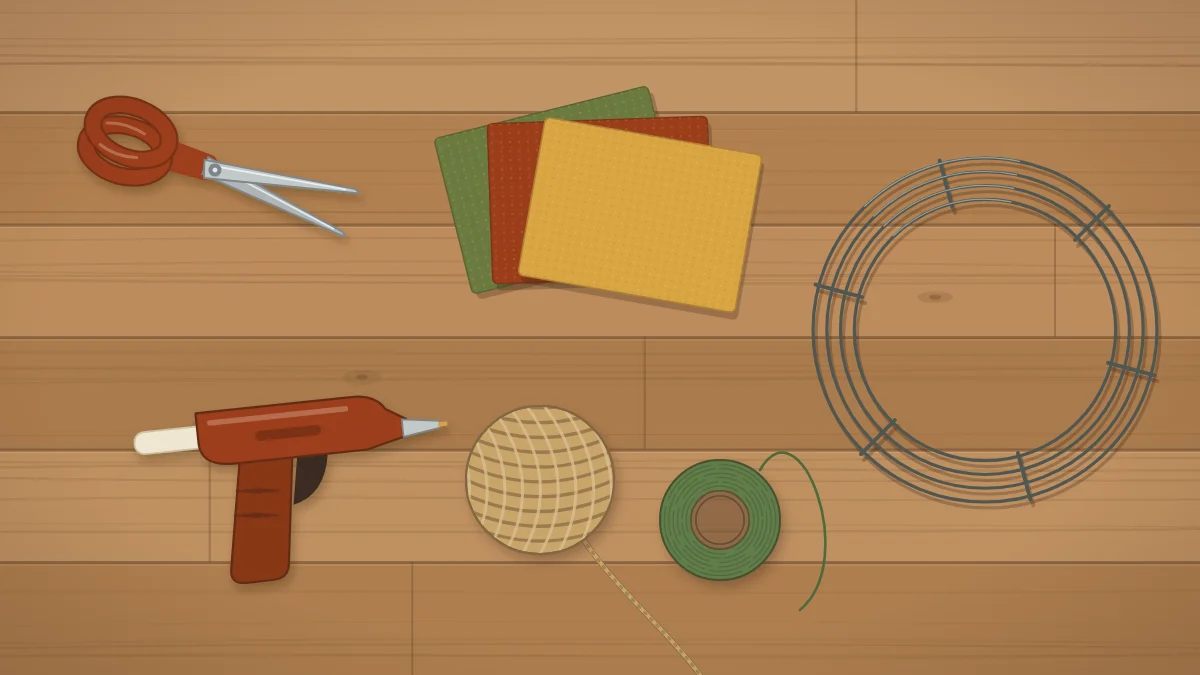
A small, well-chosen box of fall craft supplies will carry you through wreaths, garlands, pumpkins and table decor without a new shopping trip for every project. The trick is buying the things that get reused and leaving the one-project extras on the shelf.
This starter kit is organized by job: cutting, sticking, the soft materials, the structural ones and paint. Near the end you will find a short list of what can wait, plus the handling basics for the two tools that deserve respect.
Cutting tools
Two pairs of scissors do most of the work. Keep one sharp pair for fabric and felt only, and a second everyday pair for paper, twine and ribbon. Paper dulls blades quickly, and dull scissors chew felt instead of cutting it.
- Fabric scissors: for felt, burlap, flannel and ribbon.
- Paper scissors: for cardstock, templates and tape.
- Wire cutters: for floral wire and faux stems. Never use your good scissors on wire.
- Craft knife and cutting mat: useful for stencils and crisp paper shapes, and strictly an adult tool.
Add a ruler, a pencil and a flexible tape measure and the cutting side of the kit is complete.
Adhesives: the four that cover almost everything
Most frustration in seasonal crafting comes from the wrong glue rather than the wrong technique. Four adhesives handle nearly every fall project.
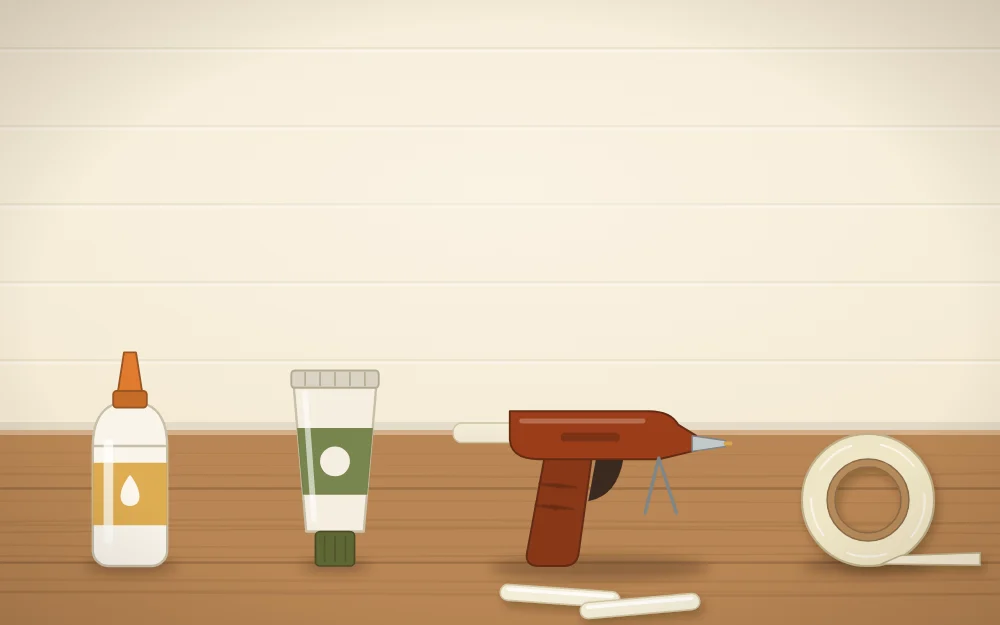
- White craft glue: dries clear and gives you time to reposition. Best for paper and other light, porous materials.
- Tacky craft glue: thicker and grabbier, so pieces stay where you put them. A good match for felt, fabric and twine.
- Low-temperature glue gun: sets in seconds and holds bulky or uneven pieces such as pinecones, acorn caps and faux stems.
- Double-sided tape: instant and mess-free for flat paper work.
| Material | Best choice | Also works | Tends to fail |
|---|---|---|---|
| Paper and cardstock | Double-sided tape | White craft glue, thinly | Glue gun (leaves bumps) |
| Felt and fabric | Tacky craft glue | Glue gun | Tape |
| Burlap and twine | Glue gun | Tacky craft glue | White glue (soaks in) |
| Pinecones and acorns | Glue gun | Floral wire | Tape, white glue |
| Pumpkin skin | Tacky craft glue | Decoupage medium | Tape in damp weather |
Drying and setting times vary by product, so treat the label as the final word. As a general habit, let glued pieces rest flat before you hang or move them.
Soft materials: felt, burlap and twine
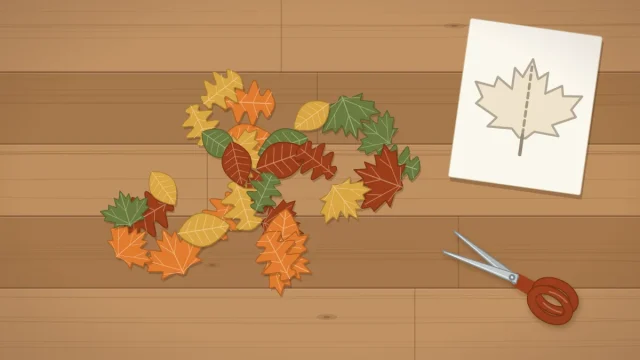
Felt is the friendliest material in the box because it does not fray and needs no hemming. Acrylic craft felt is inexpensive and fine for most shapes; wool-blend felt is denser, cuts cleaner and holds a crisp edge. A few sheets in orange, mustard, rust, olive and cream cover most palettes. If you have never cut it before, the guide on how to make felt leaves is a good first exercise.
Burlap brings the rough, woven texture that says harvest. It is sold by the yard and as ribbon; the ribbon version, about 5 to 6 inches (13 to 15 cm) wide, is easier to manage because the edges are already finished. Burlap sheds, so cut it over a tray or outdoors. The fabric is also known as hessian.
Jute twine is the quiet workhorse. It hangs garlands, wraps jars, ties bundles and hides joins. One medium ball usually lasts a full season.
Structure: floral wire and wreath forms
Floral wire comes on a paddle or in pre-cut lengths. A medium-weight green or brown wire is the most versatile: firm enough to hold a pinecone, soft enough to twist by hand. Fold sharp cut ends back into the work so they cannot scratch a door or a finger.
Wreath forms come in three common types, and each one suits a different style.
- Wire ring: light and reusable, made for looped burlap or wired-on stems.
- Straw-style or foam form: a solid round surface for pinning, wrapping or gluing full coverage.
- Grapevine ring: twisted twigs that look good even partly bare, so you need fewer decorations.
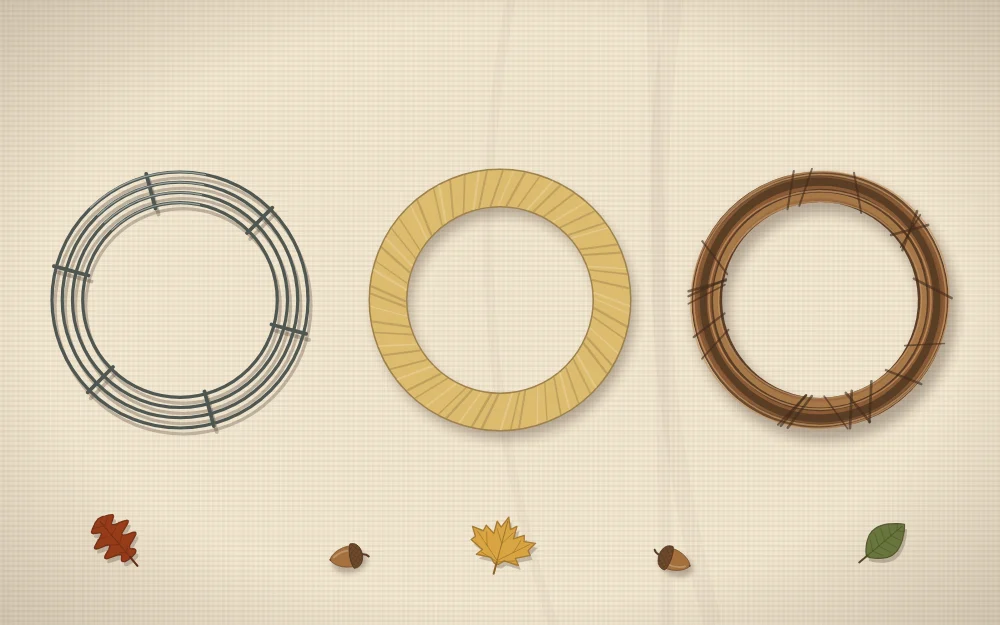
A base about 14 inches (36 cm) across fits most front doors. Buy one form to begin with; the steps in how to make a fall wreath will help you decide which type matches the look you want.
Craft paint and brushes
Acrylic craft paint sticks to pumpkins, wood, paper, glass jars and pinecones, and it cleans up with water while wet. Start with five or six small bottles: white or cream, mustard, a warm orange, a deep red or rust, a muted green and brown. You can mix most other shades from those.
Three brushes are plenty: a flat brush about 1 inch (2.5 cm) wide for base coats, a small round brush for details and a foam brush for decoupage medium. A clear acrylic sealer is optional. If you choose a spray version, use it outdoors and follow the label.
What can wait
Some supplies are worth buying only when a specific project asks for them.
- Specialty punches, stencils and stamps
- Fabric by the yard, beyond a few remnants
- Faux florals and stems in bulk
- Fusible hem tape and fabric paint
- Extra wreath forms in other sizes
The projects in the roundup of easy DIY fall decorations can all be made from the core kit above, which makes it a sensible test before you add anything else.
Safe handling basics
Safety note
A low-temperature glue gun still burns skin. Rest it on its stand over a scrap of cardboard, press pieces down with a craft stick instead of a fingertip, and unplug it when you step away.
- Adults do the cutting with craft knives. Cut away from your body on a mat, and cap or retract the blade as soon as you finish.
- Keep cords where nobody will trip on them.
- Store wire, pins, beads and other small pieces in closed containers, away from small children and pets.
- Work with spray products outdoors only, following the label.
Keep the whole kit in one lidded bin with the adhesives upright, and next fall you can start crafting the day the first leaves turn.
Frequently asked questions
What glue works best on felt?
Tacky craft glue is the most forgiving choice for felt because it grips quickly, dries flexible and gives you a moment to adjust. A low-temperature glue gun is faster for attaching felt to wreath forms or twine, though it can leave a firm ridge under thin felt.
Do I need a glue gun to make fall decorations?
Not for everything. Paper, felt and fabric projects work well with tacky craft glue or double-sided tape. A low-temperature glue gun becomes useful once you attach bulky, uneven pieces such as pinecones or faux stems. Handle it carefully, since the nozzle and fresh glue can still burn skin.
What size wreath form should a beginner buy?
A base about 14 inches across suits most standard front doors and is easy to cover without a huge quantity of materials. Remember that leaves, loops and bows extend past the form, so the finished wreath will usually measure a few inches wider than the base.