
Why Leading Lines Are the Easiest Way to Make Your Photos Look Professional
Examples of leading lines in photography are everywhere — and once you see them, you can’t unsee them.
Here are the most common ones you’ll encounter:
- Roads and paths stretching toward a horizon or mountain
- Railway tracks converging to a vanishing point
- Staircases (especially spirals) directing the eye downward
- Rivers and shorelines curving through a landscape
- Fences, railings, and bridges pointing toward a subject
- Tree branches and roots framing a background
- Shadows and light beams creating invisible paths
- Church aisles and hallways leading to a person
- Architectural edges like building lines or window frames
- Reflections in water doubling your lines
Leading lines are one of the simplest composition tools in photography. They use lines already in your scene — natural or man-made — to pull the viewer’s eye straight to your subject.
The best part? You don’t need fancy gear or editing skills. You just need to see them before you shoot.
Composition is one of the few things you can’t fix after the fact — not even with advanced editing software. Getting it right in camera is what separates a forgettable snapshot from a photo that stops people mid-scroll.
What Are Leading Lines and Why Do They Work?
At its core, a leading line is any shape, edge, or contrast in a photograph that directs the viewer’s attention toward a specific point of interest. Think of them as the “visual GPS” of your image. Human eyes are naturally drawn to lines; we instinctively follow them to see where they go. When we strategically place these lines, we control the viewer’s journey through the frame.
The Science of Visual Weight
In photography, every element has visual weight. A bright red apple in a white room has a lot of weight. However, a strong line acts like a conveyor belt, carrying the viewer’s gaze toward that weight. If you have a subject with low visual weight — perhaps a small person in a massive landscape — a leading line is essential to help the viewer find them.
Creating the 3D Illusion
The most powerful reason we use leading lines is to create depth. A photograph is a flat, two-dimensional medium. By using lines that start wide at the bottom of the frame and narrow as they move toward the background (converging lines), we trick the brain into seeing a three-dimensional space. This adds a sense of perspective and scale that makes the image feel immersive.
Benefits of Mastering Leading Lines:
- Flow: They create a logical path for the eye to follow, preventing the viewer from feeling “lost” in the image.
- Focus: They act as a spotlight, pointing directly at your subject.
- Narrative Structure: They can suggest a journey, such as a road leading to a distant, mysterious mountain.
- Reduced Visual Noise: By organizing the scene around a line, you naturally declutter the composition.
10 Inspiring Examples of Leading Lines in Photography
To truly master this, we need to look at how the pros do it. Leading lines aren’t just for landscapes; they appear in every genre from weddings to street photography.
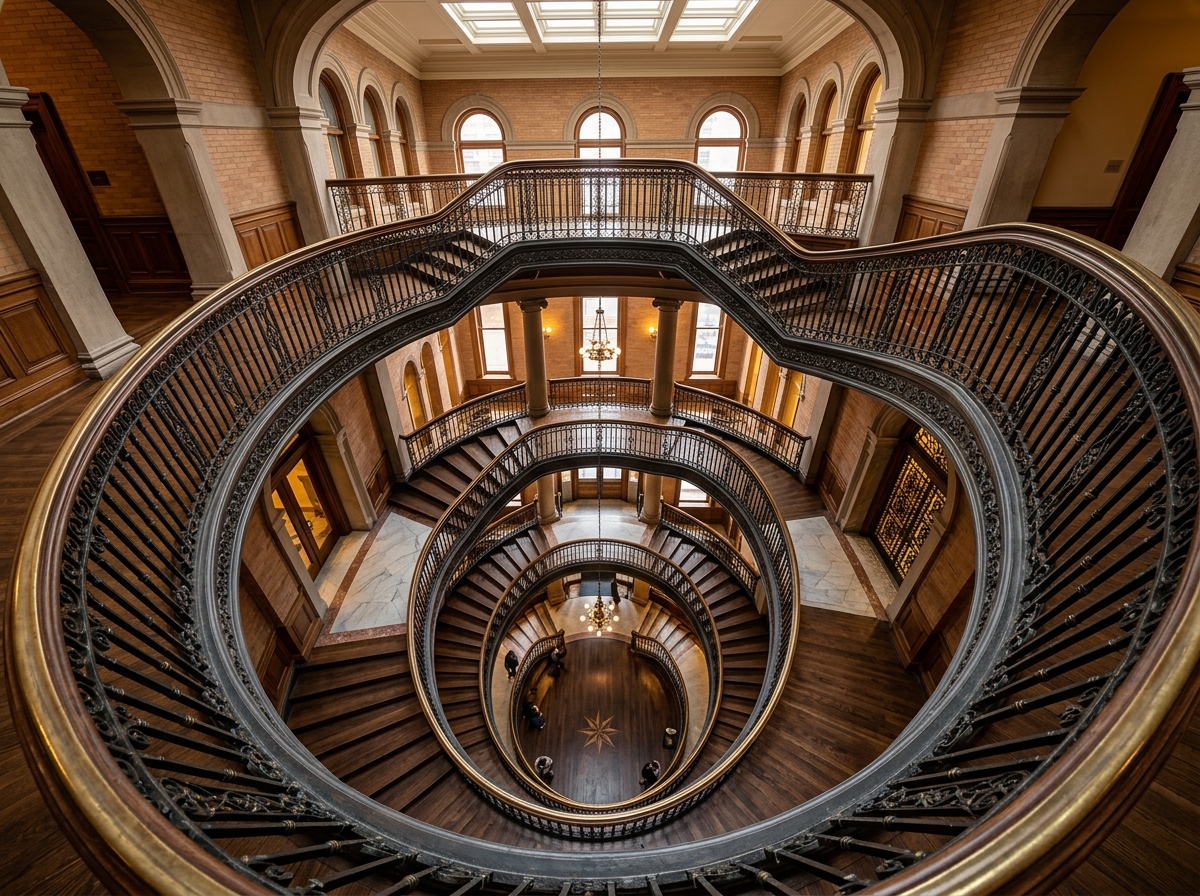
1. Urban Architecture
Cities are a goldmine for examples of leading lines in photography. Think of the sharp edges of a skyscraper, the long handrails of a subway station, or the geometric patterns of a brick wall. When we shoot in urban environments, we can use these “hard” lines to frame a subject or lead the eye through a complex street scene.
2. Nature Trails and Paths
A winding dirt path through a forest doesn’t just look pretty; it tells the viewer exactly where to look. Whether it’s a hiking trail in the Alps or a simple garden path, these lines create a sense of adventure and movement.
3. Shorelines and Waves
Nature provides “soft” leading lines. The edge where the ocean meets the sand is a perfect example. A long exposure can turn crashing waves into misty white lines that point toward a sunset or a distant lighthouse.
4. Railway Tracks
Perhaps the most classic example of all. Parallel tracks appear to meet at a “vanishing point” on the horizon. This creates incredible depth. Note: Always prioritize safety and legal access when shooting near tracks!
5. Bridges and Overpasses
Bridges are designed with leading lines in mind. The suspension cables, the walkway, and the railings all converge toward the other side, making them perfect for portraits or cityscapes.
6. Urban Backgrounds in Bird Photography
Even in wildlife photography, we can use man-made lines. When composing bird photos with urban backgrounds, look for railings or roof edges that point toward the bird. This grounds the subject in its environment while maintaining a strong focus.
7. Shadows and Light Beams
Lines don’t have to be physical objects. A beam of light coming through a window or the long shadow of a fence at “golden hour” can create powerful, temporary leading lines that add drama and mystery.
8. Reflections
Water surfaces can double your impact. A lake reflecting a mountain range creates a symmetrical set of lines that draw the eye toward the center of the frame.
9. Clothing and Accessories
In wedding and fashion photography, we often use the subject’s own wardrobe. A long wedding veil flowing in the wind or the train of a dress can act as a line leading directly to the bride’s face.
10. Hallways and Aisles
The symmetry of a long hallway or a church aisle is a powerful tool. By placing your subject at the end of the aisle, you use every horizontal and vertical line in the room to scream, “Look here!”
Mastering Different Types of Leading Lines
Not all lines are created equal. The type of line you choose will change the “vibe” or emotional impact of your photograph.
Straight Lines: The Direct Approach
Straight lines are efficient and powerful. They suggest order, strength, and speed. A straight road suggests a fast, determined journey.
S-Curves: The Graceful Flow
An S-curve is a line that winds back and forth. Think of a river snaking through a valley or a curved road in the desert. These lines are considered more “graceful” and “relaxing” than straight lines. They encourage the viewer to linger on the image longer.
Diagonal Energy
Diagonal lines are the most dynamic. While horizontal lines feel stable and vertical lines feel tall, diagonals feel like they are in motion. They add a sense of action and tension to your composition.
Horizontal Calm vs. Vertical Depth
Horizontal lines (like the horizon or a fallen log) suggest rest and stability. Vertical lines (like trees or pillars) suggest height and power. When deciding how to frame your shot, consider vertical or horizontal framing tips for bird photography to see which orientation best complements the lines in your scene.
Converging Lines and Vanishing Points
When two or more lines move toward each other as they go deeper into the frame, they are “converging.” The point where they meet is the “vanishing point.” Placing your subject at or near this point is a surefire way to make them the star of the show.
| Line Type | Emotional Impact | Common Examples |
|---|---|---|
| Straight | Strength, Order, Speed | Railway tracks, buildings |
| S-Curve | Grace, Calm, Beauty | Rivers, winding roads |
| Diagonal | Action, Tension, Energy | Staircase railings, shadows |
| Horizontal | Stability, Peace | Horizon, shorelines |
| Vertical | Power, Growth, Height | Trees, skyscrapers |
Pro Tips for Using Examples of Leading Lines in Photography Effectively
Now that you know what to look for, how do you actually execute the shot? Here are some expert techniques to take your compositions to the next level.
1. Use a Wide-Angle Lens
Wide-angle lenses (like a 16mm or 24mm) exaggerate perspective. They make the foreground look much larger than the background. This makes your leading lines look longer and more dramatic, pulling the viewer deep into the frame.
2. The Near-Far Technique
This is a favorite for landscape photographers. You place a strong leading line (like a rock or a log) very close to the lens in the foreground. This line then leads the eye all the way to a subject in the far distance. It creates an incredible sense of scale.
3. Experiment with Angles
Don’t just stand at eye level. By exploring-angles-and-perspectives-in-bird-photography, we’ve learned that getting low to the ground can turn a simple sidewalk crack into a massive leading line.
4. Combine with the Rule of Thirds
You don’t have to choose between techniques! Try having your leading line start in a bottom corner and lead toward a subject placed on one of the “power points” of the Rule of Thirds grid.
Avoiding Common Mistakes with Examples of Leading Lines in Photography
Even with the best intentions, it’s easy to trip up. Here are the most common pitfalls we see:
- Lines Leading Off-Frame: This is the biggest mistake. If your line leads the viewer’s eye to the edge of the photo and out into “nothingness,” you’ve lost them. Always ensure the line points at something.
- Insufficient Visual Weight: If your line leads to a subject that is too small or blend into the background, the line feels like it’s pointing to a mistake. Make sure the “destination” is worth the trip.
- Cluttered Backgrounds: If there are too many competing lines in the background, the “main” leading line loses its power. Keep it simple.
- Breaking the Line: If a person or object stands in front of the line in a way that cuts it off before it reaches the subject, the visual flow is ruined.
Creative Ways to Find Examples of Leading Lines in Photography
If you can’t find a road or a fence, look for “implied” lines. These are lines that aren’t physically there but are created by the scene:
- Gaze: If a person in your photo is looking at something, their line of sight creates an implied leading line.
- Color Patterns: A row of red flowers in a green field creates a line through color contrast.
- Human Limbs: In portraits, the way a model positions their arms or legs can point directly to their face.
- Light Contrast: The “line” where a bright sunlit patch meets a dark shadow is a very effective tool.
Enhancing Your Composition in Post-Processing
Sometimes you capture a great shot, but the lines aren’t quite “hitting” the way you wanted. This is where editing comes in. At Ciber Conexão, we believe that editing is the final step of composition.
Cropping for Impact
A tighter crop can remove distracting elements at the edge of the frame that “bleed” your leading lines. By following crop-and-composition-editing-tips, you can reposition the start and end points of your lines to create a more pleasing flow.
Tonal Shifts and Contrast
You can use “burning and dodging” (darkening and lightening specific areas) to emphasize a line. If you have a path leading to a house, slightly brightening the path and darkening the surrounding grass will make that leading line pop.
Image Rotation
Sometimes a slight 1-degree rotation can align a horizontal line perfectly with the frame, making the composition feel much more stable and professional.
Frequently Asked Questions about Leading Lines
Do leading lines always have to be straight?
Not at all! In fact, many photographers prefer curved lines or S-curves. While straight lines are bold and direct, curved lines are often more organic and pleasing to the eye. They suggest a slower, more exploratory journey through the image.
Can leading lines be created with light and shadow?
Yes, and these are often the most sophisticated examples of leading lines in photography. Tonal contrast—the difference between the brightest and darkest parts of an image—can create very strong “implied” lines. A “god ray” of sun through the clouds is a classic example of a light-based leading line.
What is the best lens for capturing leading lines?
While you can use any lens, a wide-angle lens is generally the best. Because wide-angle lenses distort perspective by making foreground objects look larger, they make lines appear to converge more sharply. This creates a much more dramatic sense of depth than a telephoto lens, which tends to “flatten” the scene.
Conclusion
Mastering examples of leading lines in photography is like learning a new language. At first, you have to look for them consciously. You’ll find yourself walking around parks or city streets thinking, “Where is the line?”
But eventually, it becomes an “automatism”—a mind tattoo that you can’t erase. You’ll start to see the world in segments and paths. You’ll move your camera two inches to the left just to align a railing with a subject’s eyes, and that’s the moment your photography will truly transform.
Composition is about storytelling. Use your lines to tell the viewer where to look, how to feel, and where the journey ends.
Ready to take your editing to the next level? Explore more expert photography tips at Ciber Conexão to master the art of the perfect crop and beyond. Happy shooting!
