
Defining the Lightweight Telephoto for Birds
When we talk about a lightweight telephoto for birds, we aren’t just discussing a lens that fits in a backpack. We are talking about gear that fundamentally changes how you interact with nature. In the past, “serious” bird photography required a massive prime lens and a heavy-duty tripod with a gimbal head. While those setups offer incredible apertures, they often weigh between 3,000g and 5,000g (6 to 11 lbs).
For most of us, the ideal weight range for a handheld birding lens falls between 500g and 1,500g. Staying within this bracket allows you to track a hawk or an eagle across the sky for several minutes without your muscles seizing up.
Choosing the right gear involves understanding a few key trade-offs:
- Aperture vs. Portability: To keep a lens light, manufacturers often use “slower” maximum apertures like f/5.6, f/6.3, or even f/8. While this sounds limiting, modern cameras handle high ISO settings so well that shooting at f/8 in daylight is no longer a barrier to getting professional results.
- Image Stabilization (IS/VC/OS): This is the secret sauce. When you ditch the tripod, the lens has to compensate for your natural hand tremors. Modern lenses now offer 4 to 6 stops of stabilization. This means you can shoot at much slower shutter speeds than the old “1/focal length” rule suggested.
- Autofocus Technology: Speed is everything. Technologies like Canon’s Nano USM or Fujifilm’s Linear Motors provide nearly silent and instantaneous focus, which is vital when a warbler is hopping through thick branches.
- Weather Sealing: Birding doesn’t stop when the clouds roll in. Many lightweight options now include dust and moisture resistance, allowing you to stay in the field during a light drizzle or at a dusty migration hotspot.
If you are still debating the merits of different lens types, check out our guide on telephoto lens vs zoom lens for birds to see which configuration fits your specific style. For more general advice on staying mobile, explore our tips on lightweight bird photography gear.
Top Picks: The Best Lightweight Telephoto for Birds by System
The market has exploded with high-quality, portable glass. Whether you shoot full-frame mirrorless, APS-C, or Micro Four Thirds, there is a “featherweight” champion waiting for you.
| Feature | Canon RF 100-400mm | Fujinon XF70-300mm | Sigma 100-400mm DG DN | OM System 150-400mm |
|---|---|---|---|---|
| Weight | 635g | 580g | 1,140g | 1,875g |
| Max Reach | 400mm | 457mm (equiv.) | 400mm | 1000mm (equiv.) |
| Stabilization | 5.5 Stops | 5.5 Stops | 4-5 Stops | 8.0 Stops (Sync IS) |
| Filter Size | 67mm | 67mm | 67mm | 95mm |

Canon RF 100-400mm F5.6-8 IS USM
This lens is a marvel of modern engineering. Weighing just 635g, it is roughly the same size as a standard 70-300mm lens but offers that crucial 400mm reach. It uses UD glass to keep images sharp and is compatible with RF extenders, making it a favorite for hikers.
FUJINON XF70-300mm F4-5.6 R LM OIS WR
For Fujifilm shooters, this is the ultimate adventure lens. At 580g, it is incredibly light. Because it sits on an APS-C sensor, its 300mm focal length behaves like a 457mm lens on a full-frame camera. It also features a linear motor for snappy AF and is fully weather-sealed.
SIGMA 100-400mm F5-6.3 DG DN OS | Contemporary
Available for Sony E-mount and L-mount (and now Fujifilm X), this Sigma lens is known for “heavyweight performance in a lightweight body.” It uses FLD and SLD glass to correct aberrations and features a push-pull zoom mechanism that many birders find more intuitive for tracking fast-moving subjects.
Tamron 100-400mm F/4.5-6.3 Di VC USD
Specifically designed for Canon and Nikon DSLRs, this Tamron lens uses magnesium alloy in its construction to keep the weight down to about 1,115g. It’s a fantastic choice for those who haven’t moved to mirrorless yet but want a lightweight telephoto for birds that can be handheld all day.
M.Zuiko Digital ED 150-400mm F4.5 TC1.25X IS PRO
This is the “pro” exception. While it is the heaviest on our list at 1,875g, it is shockingly light when you consider it has a built-in 1.25x teleconverter and offers up to 1000mm equivalent reach. For the serious bird photographer, this replaces a 12lb prime lens setup.
Best Budget Lightweight Telephoto for Birds Under $1,000
You don’t need to empty your savings account to get into bird photography. Several of the best-performing lightweight lenses are also the most affordable.
The Canon RF 100-400mm usually retails for under $700, making it an absolute steal for the performance it offers. Similarly, the Sigma 100-400mm Contemporary provides professional-grade sharpness at a fraction of the cost of “first-party” flagship lenses.
If you’re looking for more ways to save, we have compiled a list of cheap telephoto lenses for birds and cheap telephoto lenses for bird watching that focus on value without sacrificing the ability to get a clear shot of a sparrow or a hawk.
Maximizing Reach with Crop Sensors and Teleconverters
One of the best “hacks” in bird photography is using a smaller sensor. In our editing work here at Ciber Conexão, we often see how a tighter crop can transform a photo, but getting that “crop” in-camera is even better.
The Magic of the Crop Factor
When you put a lightweight telephoto for birds on an APS-C or Micro Four Thirds (MFT) camera, you get “free” reach.
- APS-C (Sony/Fuji/Canon): Usually a 1.5x or 1.6x multiplier. A 400mm lens becomes a 600mm or 640mm equivalent.
- Micro Four Thirds (Olympus/Panasonic): A 2x multiplier. A 300mm lens, like the Panasonic 100-300mm, gives you a massive 600mm equivalent field of view.
This allows you to stay further away from the birds, preserving their natural behavior and giving you a better chance at a candid shot. For those shooting in parks or urban environments, our guide on urban bird photography gear explains how to use this limited gear to its maximum potential.

Pairing Your Lightweight Telephoto for Birds with Teleconverters
If the native reach isn’t enough, many of these lenses are compatible with teleconverters (also called extenders). For example, the RF100-400mm F5.6-8 IS USM can be paired with an RF 1.4x or 2x extender.
- 1.4x TC: Increases focal length by 40%, but you lose 1 stop of light.
- 2x TC: Doubles your focal length, but you lose 2 stops of light.
Pro Tip: While teleconverters are great, they do impact autofocus speed and image sharpness. On budget lenses with narrow apertures (like f/8), adding a 2x teleconverter might push your aperture to f/16, which requires very bright sunlight and can make autofocus struggle. We usually recommend the 1.4x TC as the “sweet spot” for maintaining performance while gaining reach.
Field Performance: Birds in Flight and Stabilization
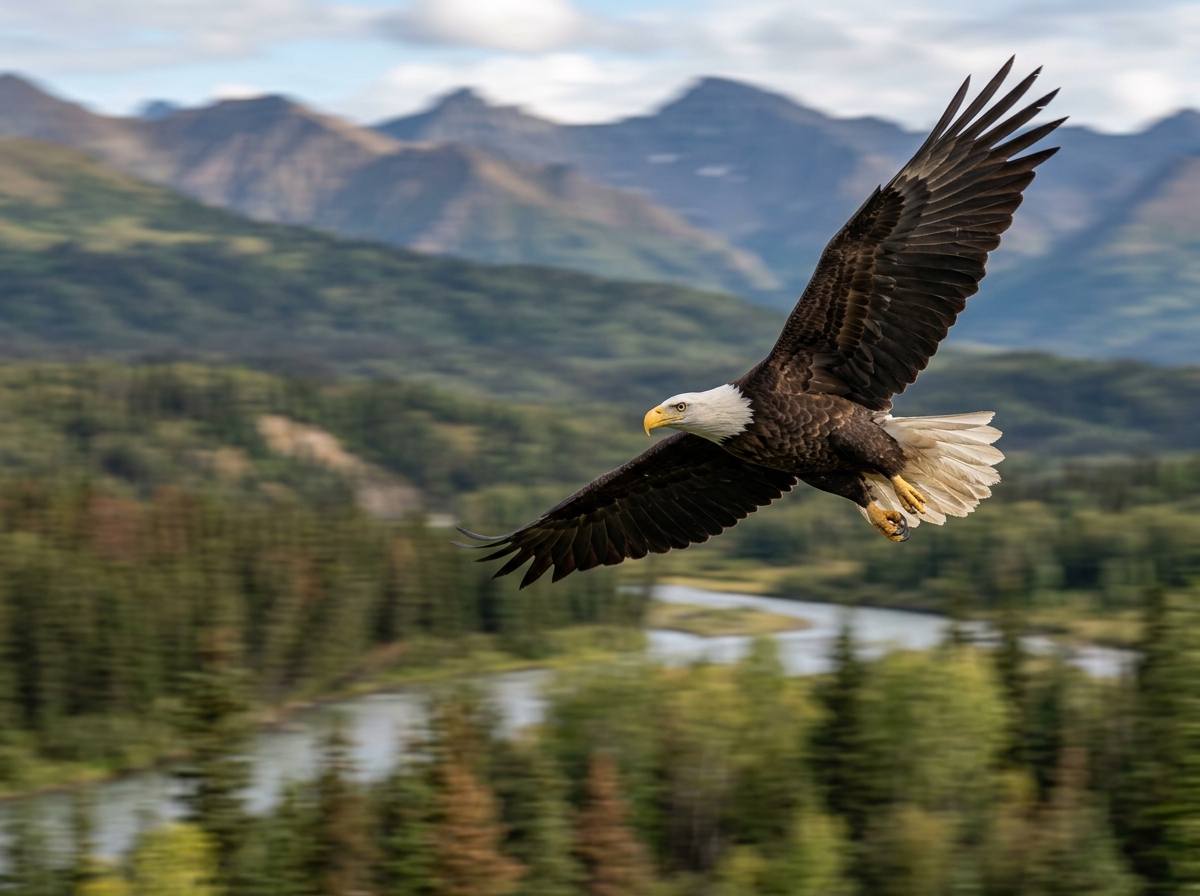
The true test of a lightweight telephoto for birds is a “Bird in Flight” (BIF) scenario. This is where high-speed autofocus and image stabilization work in tandem.
The “Safety Net” of Aperture
While many photographers crave an f/4 aperture for “bokeh” (background blur), shooting birds in flight at f/8 can actually be an advantage. The slightly deeper depth of field provides a “safety net.” If your autofocus is slightly off the bird’s eye and hits the wing instead, f/8 is more likely to keep the whole bird in focus than f/4.
Stabilization for Handheld Success
Lenses like the Canon RF 100-400mm offer 5.5 stops of Optical IS, which can jump to 6 stops of “Coordinated IS” when used with a camera body that has In-Body Image Stabilization (IBIS). This is critical for BIF because it stabilizes the viewfinder, making it much easier for you—and the camera’s AF system—to track the subject.
Lenses like the Tamron 100-400mm utilize Dual MPU (Micro-Processing Unit) systems. One processor is dedicated solely to autofocus, while the other handles vibration compensation. This division of labor ensures that neither system lags when the action gets intense.
If you are interested in how prime lenses compare in these fast-moving urban scenarios, take a look at our analysis of prime lenses for urban bird shots.
Frequently Asked Questions about Lightweight Birding Lenses
What is the ideal weight for a handheld birding lens?
For most photographers, a lens weighing between 600g and 1,200g is the “sweet spot.” This allows for several hours of active shooting without needing a monopod or tripod. Once a lens exceeds 1,500g, most people will begin to feel significant fatigue after an hour of handheld use.
Do lightweight lenses perform well in low light?
Lightweight lenses often have narrower maximum apertures (like f/6.3 or f/8), which means they let in less light. However, modern mirrorless cameras have exceptional high-ISO performance. You can comfortably shoot at ISO 3200 or 6400 to maintain fast shutter speeds, and then use modern noise-reduction software to clean up the image later.
Can I use a teleconverter with a budget telephoto lens?
Yes, but with caveats. You must check compatibility first (not all lenses physically fit teleconverters). Secondly, a teleconverter narrows your aperture further. If you start at f/8 and add a 2x teleconverter, you are at f/16. This is fine for bright, sunny days, but your camera’s autofocus may slow down significantly in overcast conditions.
Conclusion
Choosing a lightweight telephoto for birds is about more than just saving your back; it’s about increasing your “keeper rate.” When you aren’t fighting the weight of your gear, you are free to focus on composition, timing, and the sheer joy of watching wildlife.
At Ciber Conexão, Hugo Andrade and our team see thousands of bird photos every month. The shots that stand out aren’t always the ones taken with the most expensive $12,000 lens. They are the ones where the photographer was mobile enough to get the right angle and patient enough to wait for the perfect moment.
Once you’ve captured your shots, the “digital darkroom” is where the magic really happens. We specialize in helping you refine those images through expert crop and composition techniques, ensuring that even a distant bird becomes a stunning portrait. To learn more about the best tools and editing tricks, explore our full library of birding gear and editing advice.
Ditch the tripod, grab a lightweight zoom, and head out—the birds aren’t going to wait for you to set up a tripod!
