
Core Principles of the Bird Frame Composition Guide
When we talk about a bird frame composition guide, we have to start with the “where.” Where does the bird sit within those four edges of your photo? Many beginners instinctively place the bird dead-center. While this can work for symmetrical head-on shots, it often feels static or “trapped.”
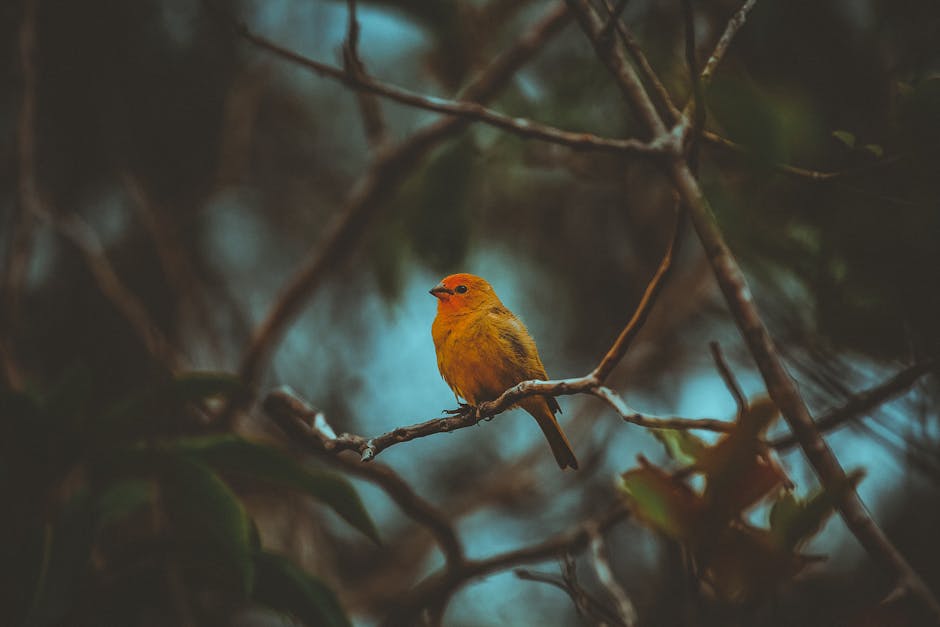
Subject placement is the foundation of visual storytelling. By moving the bird away from the center, you create a sense of balance and tension that leads the viewer’s eye through the entire image. This is where the concept of “power points” comes in. If you imagine a grid over your viewfinder, the spots where the lines intersect are the most naturally pleasing places for a viewer’s eye to land.
Beyond just placement, we must prioritize the bird’s eye. It is the emotional anchor of the photo. A sharp eye with a “catchlight”—that tiny glint of light reflected in the pupil—makes the bird look alive and engaged. Without that spark, even a perfectly composed bird can look dull or “stuffed.” As seen in Ryan Schain’s work at the Macaulay Library, placing a House Finch off-center while maintaining that sharp focus creates a professional, polished look.
Applying the Rule of Thirds in Your Bird Frame Composition Guide
The Rule of Thirds is perhaps the most famous “rule” in photography, but in bird photography, it’s more of a vital suggestion. Imagine your frame is divided by two horizontal and two vertical lines, creating a nine-box grid.
To master your bird frame composition guide, aim to place the bird’s eye or its body along one of these lines or at an intersection point. This technique, beautifully illustrated in Dominic Garcia-Hall’s photography, prevents the “bullseye” effect. It creates a more dynamic image because the viewer’s eye has to move to find the subject, making the discovery more rewarding.
Providing Space to Look Into
One of the most common mistakes we see is “clipping” the bird’s gaze. If a bird is looking to the right, you should provide more space on the right side of the frame. This is known as the “Rule of Space” or “Lead Room.”
When a bird is looking toward the edge of the frame with no room to breathe, the viewer feels claustrophobic. By giving the bird “active space” to look or fly into, you suggest a world beyond the frame. It tells the viewer that the bird is reacting to something—perhaps a predator, a mate, or a food source—which adds an immediate layer of intrigue to your work.
Beyond the Portrait: Environmental Portraits and Birdscapes
While close-up portraits are impressive, they can sometimes be “a dime a dozen” in the age of high-tech telephoto lenses. To truly stand out, we encourage photographers to think bigger.
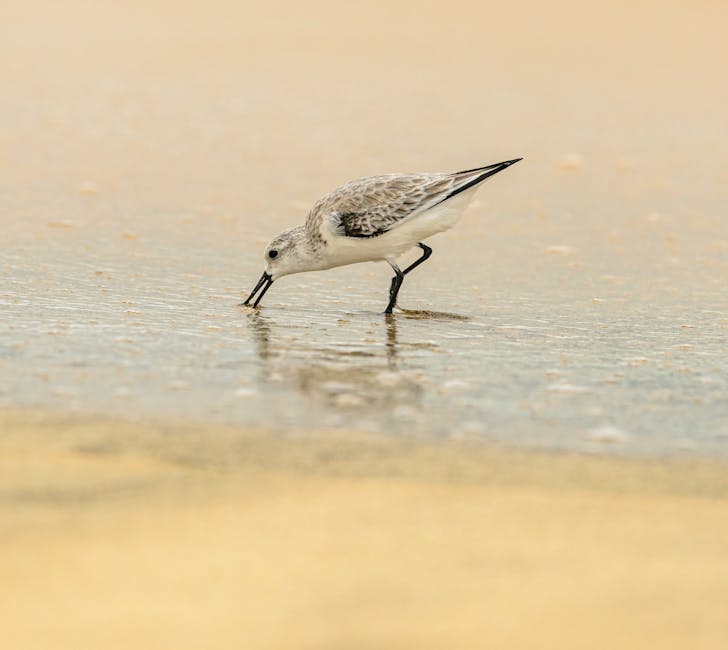
An “environmental portrait” tells a story about the bird’s life and its interaction with its habitat. Instead of zooming in until the bird fills the frame, back off. Show the crashing waves where a Harlequin Duck forages, or the tangled mangroves where a Heron stalks. Mike Cameron’s insights at the Macaulay Library emphasize that including habitat offers more creative freedom and provides ecological context that a tight headshot simply cannot.
Using Negative Space in Your Bird Frame Composition Guide
Negative space is the “empty” area around your subject—the sky, the water, or a soft wash of green forest. Using negative space effectively is a hallmark of a sophisticated bird frame composition guide.
Minimalism can be incredibly powerful. A tiny bird in a vast frame of blue water emphasizes its isolation and smallness in the face of nature. This approach, often used by photographers like Mason Maron, turns a potential limitation (not being able to get close enough) into a deliberate artistic choice. It highlights the bird’s form and color against a simple, clean backdrop.
Capturing the Bird’s Relationship with Habitat
To take your composition further, look for “anchors” and “leading lines.” A rock in the foreground can act as a natural border, while a curving shoreline can lead the viewer’s eye directly to the bird.
When we are exploring angles and perspectives in bird photography, we often find that the best story is told through the bird’s environment. For example, a Woodpecker isn’t just a bird; it’s part of a forest ecosystem. Including the fungus on the tree or the dead leaves nearby tells a story about the bird’s role in the environment, turning a simple photo into a piece of natural history.
Managing Backgrounds and Adding Dynamic Elements
The background is just as important as the bird. A messy background with distracting branches growing out of the bird’s head can ruin even the best pose.
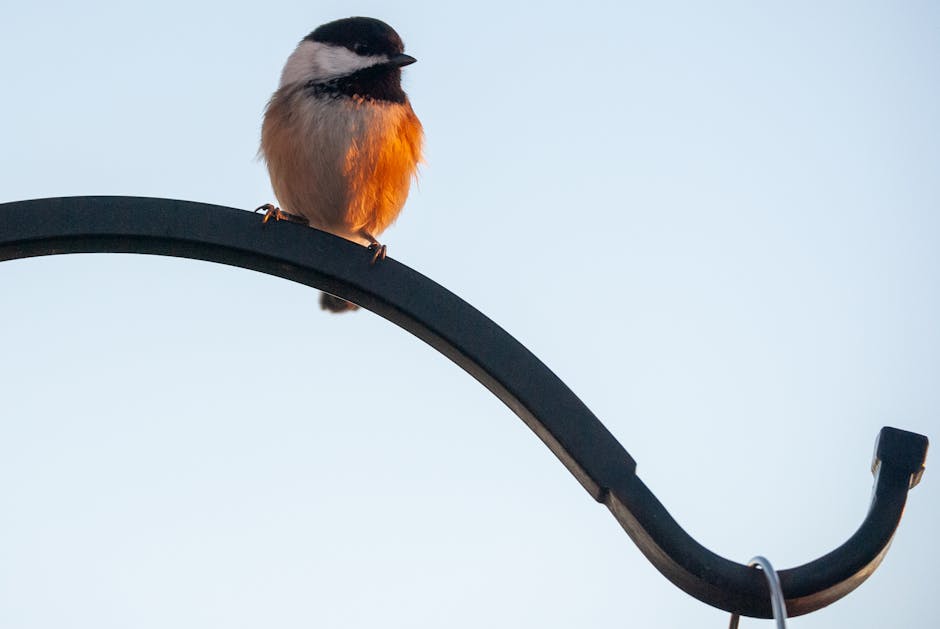
The secret to a “pro” look is background simplification. We achieve this by using a wide aperture (a low f-number) to create a shallow depth of field. This blurs the background into a smooth “bokeh,” making the bird the undisputed star. Even when composing bird photos with urban backgrounds, you can use distance and aperture to turn a chain-link fence or a building into a soft, non-distracting wash of color.
Utilizing Lines and Shapes
Think graphically. Nature is full of lines:
- Diagonal lines: A leaning branch or a bird’s angled body adds drama and movement.
- Curved forms: The “S” curve of a Swan’s neck or the ripple of water adds fluidity.
- Horizontal lines: These suggest stability and peace, perfect for a sleeping duck.
- Vertical lines: These can create a sense of tension or height.
By aligning these shapes within your frame, you create an organized, pleasing image that feels intentional rather than accidental.
Adding Action and Behavior
Action shots are the “holy grail” of bird photography. To capture them, you need to anticipate behavior. Did you know many birds defecate right before they take off? Watching for these cues allows you to be ready for that explosive moment.
When capturing action, wing position is everything. A bird with its wings fully extended or in a graceful “V” shape is much more compelling than a bird with its wings folded. Susan Nagi’s contributions to the Macaulay Library showcase how timing a shot to include a specific behavior—like feeding or preening—adds a dynamic layer that a static perch shot lacks. Remember to use a fast shutter speed (at least 1/1600s) to freeze that motion!
Advanced Framing: Multiple Birds and Action Sequences
Photographing a single bird is one thing; managing a group is a whole different ball game.
One of the most effective tricks in our bird frame composition guide is the “Odd-Number Principle.” For some reason, the human brain finds groups of three, five, or seven more aesthetically pleasing than even numbers. Even numbers often split the viewer’s attention, whereas odd numbers allow the eye to settle on a central subject with “supporters.”
Composing Birds in Flight (BIF)
Birds in flight are the ultimate test of a photographer’s skill. The key to BIF composition is “tracking space.” You must give the bird room to “fly into.” If the bird is at the very edge of the frame with its beak almost touching the border, the image feels “crashed.”
Try to capture the bird as it approaches you at a slight angle. This shows the face, the underside of the wings, and the bird’s profile all at once. Panning—moving your camera at the same speed as the bird—is the best way to keep the subject sharp while potentially blurring the background to imply speed.
Managing Multiple Subjects
When dealing with multiple birds, look for patterns or “juxtaposition.” You might have one bird in sharp focus in the foreground and another softly blurred in the background. This creates a sense of depth.
Avoid “overlapping” unless it’s a massive flock where the pattern is the point. If two birds are partially merged, it looks messy. Wait for that split second where there is clear “daylight” between each bird.
| Feature | Single Bird Composition | Multiple Bird Composition |
|---|---|---|
| Focus Point | Always the eye | The most prominent or “leading” bird |
| Placement | Rule of Thirds | Patterns or triangular formations |
| Space | Space to look into | Space for the group to move |
| Challenge | Background distractions | Overlapping shapes and clutter |
Technical Choices and Post-Processing for Better Framing
Your choices in the field are vital, but your choices at the computer are where the final “polish” happens.
One of the first decisions you’ll make is orientation. Should it be vertical or horizontal? A tall bird like a Heron often screams for a vertical crop, while a duck on a lake usually looks better in horizontal. We have a full guide on vertical or horizontal framing tips for bird photography to help you decide.
The Role of Angle and Perspective
Get low! This is perhaps the single best piece of advice in any bird frame composition guide. Shooting at the bird’s eye level creates an intimate connection that looking “down” on a bird simply cannot achieve. It also helps separate the bird from the ground, creating a much smoother, cleaner background.
Refining Composition in the Digital Darkroom
Don’t be afraid to crop. Even with the best lenses, we can’t always get the perfect framing in-camera. Cropping allows you to:
- Fine-tune the Rule of Thirds.
- Remove distracting elements at the edges of the frame.
- Straighten horizons (nothing ruins a water bird shot like a “leaking” lake).
For more in-depth help, check out our crop and composition editing tips. The goal of cropping is to simplify. If an element doesn’t add to the story of the bird, it’s probably better off left on the cutting room floor.
Frequently Asked Questions about Bird Frame Composition
Why is the bird’s eye the most important element in composition?
The eye is the window to the subject’s “soul.” In wildlife photography, humans instinctively look for the eye to establish a connection. If the eye is blurry or hidden in shadow, the viewer feels disconnected from the subject. A sharp eye with a catchlight makes the bird appear present and alive.
How do I choose between vertical and horizontal orientation?
Consider the shape of the bird and its surroundings. If the bird is tall (like an Egret) or perched on a vertical branch, a vertical frame often works best. If the bird is moving horizontally across the frame or you want to show a wide landscape, horizontal is usually the way to go.
When should I break the rule of thirds and center my subject?
Centering works beautifully for “graphic” shots—like a bird looking directly at the camera with perfect symmetry. It also works well when the bird is very small in the frame and you want to emphasize a sense of formal balance. Rules are guidelines; if it looks right, it is right!
Conclusion
Mastering the bird frame composition guide is a journey of moving from “taking a picture of a bird” to “creating a photograph of a bird.” It’s about more than just a sharp subject; it’s about the relationship between the bird, its environment, and the viewer.
Don’t be afraid to experiment. Spend time watching birds without your camera to understand their “life history” and ecology. When you know how a bird behaves, you can better predict the moments that make for a truly great composition.
At Ciber Conexão, we believe that everyone can improve their photographic eye with the right guidance and a bit of practice. Use these rules as your foundation, but eventually, let your artistic intuition take over. Go out, get low, watch the light, and most importantly, have fun capturing the incredible world of birds.
For more expert advice on elevating your images, explore more photography tips on our site. Happy shooting!
