
Why Most Pigeon Photos Fail (And How to Fix Them Fast)
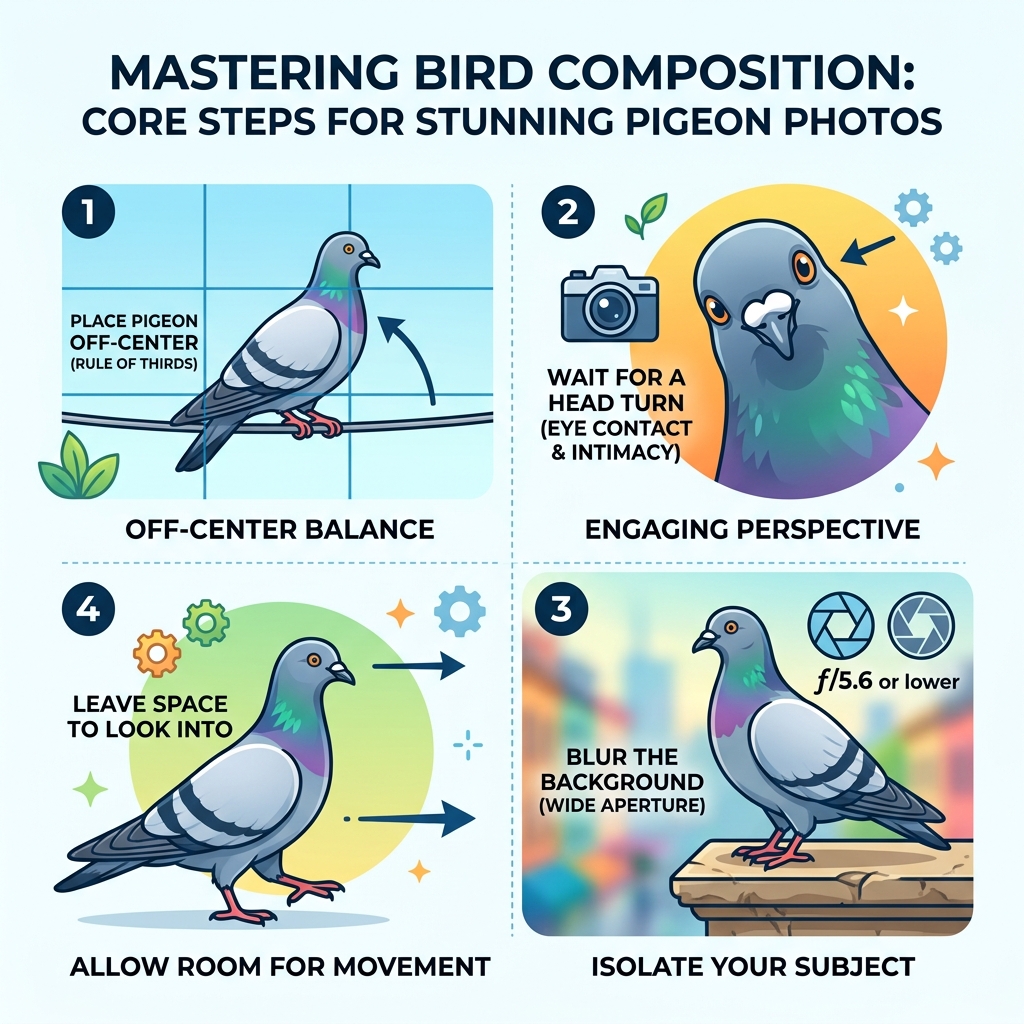
To improve pigeon photo composition, follow these core steps:
- Place the pigeon off-center using the rule of thirds
- Wait for a head turn toward the camera for eye contact and intimacy
- Blur the background with a wide aperture (f/5.6 or lower) to isolate your subject
- Leave space in front of the bird in the direction it faces or moves
- Shoot at bird level for a more natural, engaging perspective
- Use golden hour light for warm, soft tones that flatter plumage
- Crop tightly in post to remove distractions and strengthen the composition
There are an almost unimaginable number of bird photos on the internet. Standing out means making deliberate choices — not just pointing and shooting.
Here’s the thing: pigeons are everywhere. Most people walk right past them. But that accessibility is exactly what makes them such a powerful subject to practice with.
With the right composition techniques, a common city pigeon can become the centerpiece of a genuinely compelling photo. No exotic location required. No expensive gear needed.
The challenge most amateur photographers face isn’t finding pigeons — it’s knowing what to do once the bird is in frame. Centering the subject, cluttered backgrounds, awkward angles — these small mistakes quietly kill an otherwise decent shot.
This guide breaks down exactly how to fix that, step by step.
Why Pigeons are the Perfect Subject for Composition Practice
We often hear photographers complaining that they can’t find “interesting” wildlife. They think they need to trek through a rainforest or book a safari to capture a masterpiece. We disagree. The humble city pigeon—often dismissed as a “flying rat”—is actually a masterclass in photography waiting to happen.

Why should you bother? First, accessibility. You can find pigeons in almost every urban and garden setting. This allows for hours of low-pressure practice. You can observe their behavior, learn their flight patterns, and experiment with different angles without the stress of a once-in-a-lifetime encounter with a rare species.
Pigeons also have surprisingly beautiful plumage. When the light hits those iridescent neck feathers just right, you get greens and purples that rival any exotic bird. By focusing on such a common subject, you force yourself to rely on skill rather than the “wow factor” of the animal itself. If you can make a pigeon look like an award-winning subject, you can photograph anything. For more on the fundamentals of this artistic approach, check out How to Compose the Perfect Bird Photo | Audubon.
Essential Techniques to Improve Pigeon Photo Composition
When we talk about how to improve pigeon photo composition, we are really talking about “dynamic simplicity.” This is the art of balancing order with enough tension to keep the viewer’s eye moving. A static, centered bird is often boring. A bird lost in a chaotic background is frustrating. We want the middle ground.
Start by considering your angle of view. Most beginners shoot from a standing position, looking down at the bird. This creates a “descriptive” photo—it shows what a pigeon looks like from a human perspective. To create a masterpiece, get down on their level. Lie on the pavement or sit on a bench. Being at eye level with the bird creates an immediate emotional connection and helps separate the subject from the ground. For a deeper dive into these principles, visit The Ultimate Guide to Better Photo Composition.
Mastering the Rule of Thirds to Improve Pigeon Photo Composition
The Rule of Thirds is our most reliable tool. Imagine your frame is divided into a 3×3 grid. Instead of placing the pigeon’s body in the center square, place it along one of the vertical lines. Even better, try to align the pigeon’s eye with one of the “power points” (where the lines intersect).
This creates “negative space.” If a pigeon is looking toward the right, place the bird on the left vertical line. This gives the bird “room to look into.” Without this space, the composition feels cramped and the bird looks like it’s staring into a wall. If you’ve already taken the shot and it feels off, you can often fix this with smart cropping. Learn more at Crop and Composition Editing Tips.
Using Head Angles to Improve Pigeon Photo Composition
A bird looking away from the camera rarely makes for a compelling portrait. We want intimacy. The secret is waiting for that slight head turn toward the viewer.
Some photographers use a technique called “The Squeak.” By making a small, sharp sound with your mouth, you can often pique a pigeon’s curiosity, causing it to pause and look directly at you for a split second. This “eye contact” brings the photo to life. Look for the “catch light”—that tiny spark of light reflected in the bird’s eye. Without it, the eye looks dull and lifeless. Experimenting with these perspectives is key; see Exploring Angles and Perspectives in Bird Photography for more ideas.
Managing Backgrounds and Lighting for Subject Isolation
In an urban environment, backgrounds are usually the enemy. Trash cans, street signs, and bright cars can easily distract from your subject. To improve pigeon photo composition, we must manage these distractions.
The easiest way to isolate a pigeon is through “subject separation.” Use a wide aperture (a low f-number like f/4 or f/5.6) and ensure there is significant distance between the pigeon and the objects behind it. This creates a creamy “bokeh” effect that makes the bird pop. If you can’t change the background, change your position. Moving just a few inches to the left or right can hide a distracting pole behind the bird’s body.
Lighting is equally vital. The “Golden Hour”—the hour after sunrise or before sunset—is magic for pigeons. The low angle of the sun highlights the texture of their feathers and adds a warm glow to the urban stone. If you’re shooting in bright midday sun, look for shade or try backlighting the bird to create a “rim light” effect on its feathers. For urban-specific tips, check out Composing Bird Photos with Urban Backgrounds and Removing Distractions from Bird Photos.
Balancing Static vs. Dynamic Compositions
Should you go for a classic portrait or an action shot? Both have their place in telling a story.
| Feature | Static Portrait | Dynamic Action Shot |
|---|---|---|
| Focus | Intimacy and detail | Energy and story |
| Composition | Rule of thirds, eye contact | Leading lines, space to move |
| Best For | Showing plumage texture | Capturing flight or feeding |
| Challenge | Avoiding “boring” shots | Keeping the subject sharp |
Action shots—like a pigeon puffing its chest during a courtship dance or two birds squabbling over a crust of bread—tell a much richer story. Use these behaviors to your advantage. For more on capturing these moments, see Top Tips for Photographing Urban Pigeons.
Technical Setup for Sharp Action and Flight Shots
To capture a pigeon taking flight, your camera settings need to be spot on. Pigeons are surprisingly fast, and their wingbeats can easily become a blurry mess if your shutter speed is too low.
We recommend a shutter speed of at least 1/2000s for flight shots. To keep the bird sharp, use Back-Button Focus. This separates the focusing trigger from the shutter button, allowing you to track the bird continuously without accidentally losing focus when you press the shutter.
Pigeons almost always launch into the wind to get lift. If you can feel the breeze on your back, the pigeons will likely be flying toward you when they take off. Plan your composition to leave extra space in the direction they are headed. For gear recommendations, see Best Lenses for Photographing Pigeons and our guide on Photographing Pigeons in the City.
Refining Your Masterpiece in Post-Processing
Even a perfectly composed shot can benefit from a little digital polish. At Ciber Conexão, we believe post-processing should enhance the natural beauty of the bird, not make it look like a cartoon.
Start with the Lasso Tool in Photoshop to remove small distractions like cigarette butts or stray twigs. Using “Content-Aware Fill” can seamlessly replace these areas. Next, look at your crop. Sometimes, a shot that felt “okay” in the field becomes a masterpiece when you crop it to a 1:1 square or a vertical orientation to emphasize the bird’s stature.
Don’t forget sharpening. Pigeons have intricate feather patterns that respond well to subtle sharpening in post-processing. Finally, subtle color grading can help unify the urban tones of the background with the bird’s plumage. If you’re on the go, check out Editing Pigeon Photos on Mobile or read our tips on Sharpening Bird Images in Post.
Frequently Asked Questions about Pigeon Photography
Where are the best locations to find pigeons for photography?
Urban plazas and public squares are the easiest places to start because the birds are habituated to humans, allowing you to get closer. Public parks with benches are also great, as pigeons often perch on the backrests, giving you a clean, elevated subject. If you prefer a more controlled environment, setting up a bird feeder in a garden can provide consistent portrait opportunities.
What are common composition mistakes beginners make?
The most frequent mistake is centering the bird in every shot, which feels static. Another is “amputating” the bird—accidentally cutting off the tips of the wings or the feet in the frame. Lastly, many beginners ignore the background, resulting in a “pole growing out of the bird’s head” look. Always scan the edges of your frame before clicking.
How can I photograph pigeons ethically in the city?
While pigeons are common, they still deserve respect. Avoid getting so close that you cause the bird to stop its natural behavior (like feeding or preening) or take flight in a panic. Never disturb nesting sites, as many urban birds are protected by local laws during breeding season. A telephoto lens (300mm+) is your best friend for ethical wildlife photography.
Conclusion
Turning a common pigeon into a photography masterpiece isn’t about having the most expensive camera; it’s about seeing the extraordinary in the ordinary. By mastering the rule of thirds, waiting for that perfect head turn, and managing your urban backgrounds, you can improve pigeon photo composition and create images that stop people in their tracks.
We encourage you to head out to your local park today and practice these techniques. The more you shoot, the more your “photographer’s eye” will develop. At Ciber Conexão, we are dedicated to helping you refine these skills through practical, expert advice. For more tips on taking your images to the next level, explore our photo editing services and tutorials. Happy shooting!
