
The Best Crops and Plants for Attracting Birds to Your Backyard
The best crop for birds depends on what species you want to attract — but these plants and crops consistently deliver results:
| Plant / Crop | Birds Attracted | What It Provides |
|---|---|---|
| Sunflowers | Goldfinches, Cardinals, Nuthatches | Oil-rich seeds |
| Purple Coneflower | Finches, Chickadees | Seeds, insects |
| Proso Millet | Doves, Sparrows, Juncos | Small seeds |
| Buckwheat | Doves, Finches | Fast seeds (60 days) |
| Winterberry | Robins, Waxwings, Thrushes | Winter berries |
| Native Oaks | Woodpeckers, Jays, Chickadees | Acorns, insects |
| Serviceberry | Orioles, Robins, Waxwings | Early-season fruit |
| Switchgrass | Sparrows, Doves, Juncos | Seeds, nesting cover |
Your backyard can be one of the most powerful feeding stations a bird ever finds — no feeder required.
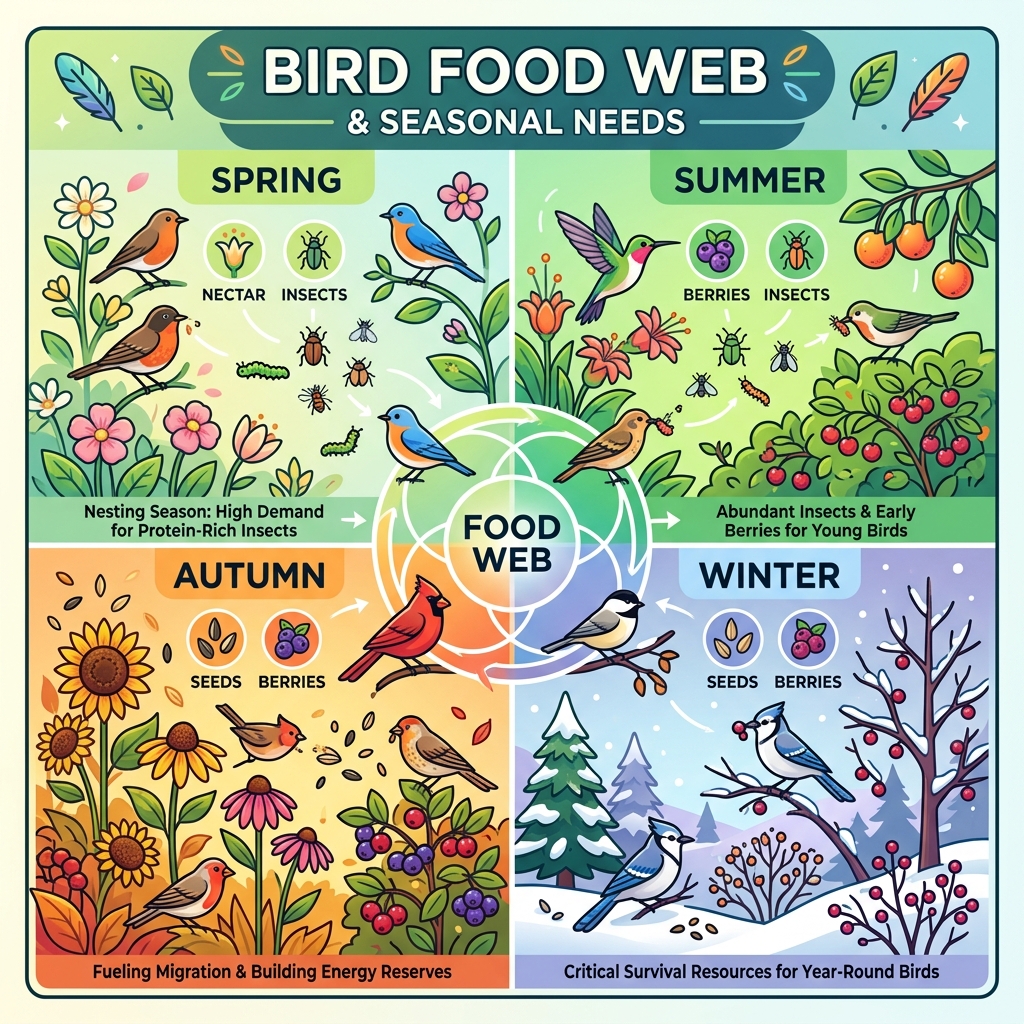
Here’s the thing most gardeners miss: over 90% of birds feed insects to their young during nesting season, not seeds or berries. That means the plants you grow matter far more than the feeders you hang. A single clutch of Carolina Chickadee chicks can consume more than 9,000 caterpillars in just 16 days. Those caterpillars only exist in meaningful numbers on native plants.
Whether you have a small backyard or a larger property, the right mix of flowering plants, grains, shrubs, and trees can support birds through every season — from spring nesting to the toughest winter months.
This guide covers the top crops and plants that deliver the most value for the widest range of bird species.
Why Native Plants are the Best Crop for Birds
When we talk about the best crop for birds, we aren’t just talking about seeds in a bag. We are talking about an entire ecosystem. Native plants—those that have grown naturally in your region for thousands of years—are the gold standard for backyard birding.
Why? Because of co-evolution. Local birds and local plants grew up together. Native plants support a massive amount of insect biomass that non-native “ornamentals” simply cannot match. While a Ginkgo tree from Asia might look pretty, it supports almost zero local caterpillar species. In contrast, a native Oak tree can support over 500 species of caterpillars.
As mentioned in our intro, 90% of birds feed insects to their young. If you don’t have native plants, you don’t have insects; if you don’t have insects, your backyard birds cannot successfully raise their chicks. Research into Doug Tallamy’s work highlights that native oaks are essentially the “superfood” of the bird world, providing both high-protein insects in the spring and energy-dense acorns in the fall.
Furthermore, native plants are climate-adapted. They don’t need expensive fertilizers or heavy irrigation because they are built for your local soil and rainfall. By choosing native species, you also practice pesticide avoidance. Since these plants are part of a balanced food web, predatory birds and beneficial insects handle the “pests” for you.
Essential Resources: What Birds Need Year-Round
To turn your yard into a sanctuary, you need to think like a bird. Food is vital, but it’s only one piece of the puzzle. Birds require three main things from your “crops”: food, shelter, and nesting material.
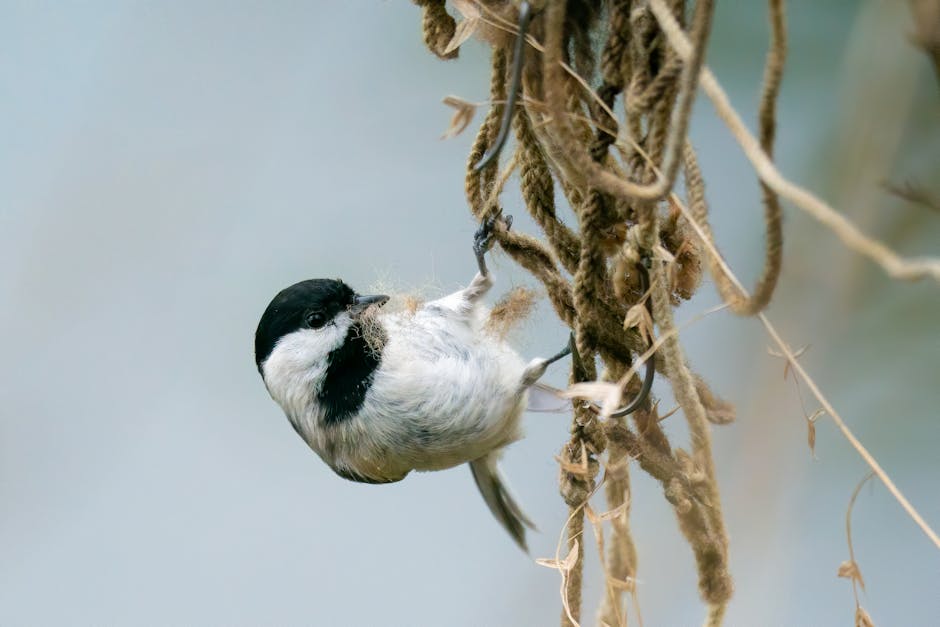
During the spring, birds like the American Goldfinch search for specific fibers. Goldfinches are famous for using the silky down from milkweed seeds to line their nests, providing a soft, insulated bed for their chicks. They also use the sturdy fibers from the stalks to spin the nest structure itself.
In the winter, the “crop” they need most is shelter. Dense evergreens and thickets of native shrubs provide a windbreak and protection from predators. Water is another critical resource; a heated birdbath in winter can be just as attractive as a patch of sunflowers in August.
Seasonal Resource Comparison Table
| Season | Primary Need | Best Plant Source |
|---|---|---|
| Spring | Insects (Caterpillars) | Oaks, Willows, Native Cherries |
| Summer | Nectar & Nesting Fiber | Milkweed, Bee Balm, Trumpet Honeysuckle |
| Fall | Fats & Energy | Sunflowers, Spicebush, Dogwood Berries |
| Winter | Persistent Fruit & Cover | Winterberry, Sumac, Native Grasses |
Top Flowering Plants and Grains for Your Garden
If you want to see a flurry of activity, the Asteraceae (sunflower and aster) family is your best friend. These plants are prolific seed producers and are widely considered the best crop for birds among flowering perennials.
Plants like purple coneflowers and black-eyed Susans provide sturdy perches and high-protein seeds. Even after the petals fall, leave the brown seed heads standing! Birds like Goldfinches and Chickadees will cling to them all winter long.
Specific recommendations for seed-eaters include:
- Big-leaf aster: Excellent for shady spots, providing seeds for finches.
- New England aster: A late-season bloomer that feeds pollinators in fall and birds in winter.
- Bee balm or wild bergamot: Hummingbirds love the nectar in summer, while sparrows feast on the thistle-like seeds in autumn.
The Best Crop for Birds: Sunflowers and Coneflowers
Sunflowers are arguably the single most effective “crop” you can plant. They produce large, oil-rich seeds that provide the heavy calories birds need to survive cold nights. Beyond the giant varieties, consider the calico aster, which offers smaller seeds that are perfect for nuthatches and smaller finch species.
Cereal Grains and Millets as the Best Crop for Birds
If you have a larger space, agricultural-style crops can attract ground-feeding birds in massive numbers. Mourning doves, for instance, have a diet that is nearly 100% seeds and grains.
To manage a “dove field” or a grain patch, keep in mind that doves prefer foraging on bare ground. They aren’t great at scratching through thick mulch. Planting a mix of Proso millet and buckwheat is a winning strategy. Buckwheat is particularly impressive because it can reach maturity and produce seeds in just 60 days, making it an excellent “emergency” crop if you get a late start in the season. For more technical details on layouts, you can review dove field management strategies.
Shrubs, Trees, and Vines for Multi-Season Support
While flowers provide the “quick hits,” woody plants are the backbone of a bird-friendly yard. They offer multi-story habitat, from the canopy down to the forest floor.
- Berries: Highbush blueberries are a double-win; we get to eat them in July, and whatever we miss, the Robins and Orioles will happily finish. For winter, winterberry is essential. It loses its leaves in winter, leaving behind glowing red berries that sustain birds when everything else is buried in snow.
- Trees: As mentioned, Oaks are king. Beyond caterpillars, they provide acorns for Blue Jays and Woodpeckers. Many species also utilize the cavities in older trees for nesting.
- Vines: Don’t overlook the vertical space. Arrow wood viburnum and Virginia creeper provide high-fat berries in the fall. If you want hummingbirds, the native Trumpet Honeysuckle is a nectar powerhouse that outshines almost any artificial feeder.
Maintenance Practices for a Thriving Bird Habitat
The best thing you can do for birds is often… nothing. Conventional gardening tells us to “clean up” the yard in the fall, but for a bird, a tidy yard is a barren yard.
Leaving dormant stems and spent flower heads provides a natural seed bank. Furthermore, these hollow stems are where many native bees and insects spend the winter. If you cut them down and bag them, you are removing next spring’s bird food.
We also recommend “leaving the leaves.” Leaf litter is a rich hunting ground for birds like Fox Sparrows and Towhees who scratch through the debris to find overwintering insects. This practice also supports soil health, which in turn supports the entire food chain.
Safety is just as important as food. If you do use supplemental feeders, cleaning bird feeders every two weeks with a diluted bleach solution is mandatory to prevent the spread of diseases like salmonella. Additionally, use window decals to prevent collisions, as birds often see the reflection of your beautiful “crops” in the glass and fly toward them at full speed.
Finally, consider the cover crop effects on songbirds. Using no-till methods ensures that ground-nesting birds aren’t disturbed and that the soil remains a living, breathing part of your backyard habitat.
Frequently Asked Questions about the Best Crop for Birds
Which crop grows the fastest for attracting birds?
Buckwheat is the champion here. It typically produces seeds within 60 days of sowing. It’s a summer annual that not only feeds birds but also smothers weeds and improves soil health, making it a favorite for those starting a new bird-friendly patch.
How do I provide continuous resources during winter?
The key is “persistence.” Plant species whose seeds or fruits stay on the plant rather than falling to the ground. Winterberry, sumac, and Joe Pye weed are excellent choices. Native grasses like Little Bluestem also provide seeds that stay above the snow line, offering a lifeline for ground-feeders like Juncos.
Why should I avoid using pesticides in a bird-friendly garden?
Pesticides are broad-spectrum killers. When you spray for “bugs,” you are removing the primary food source for 90% of nesting birds. Research shows that pesticide use can reduce spring chick survival by as much as one-third. By allowing a small amount of leaf damage, you are actually “growing” the caterpillars that turn into the birds you love to watch.
Conclusion
Creating a bird-friendly backyard is a journey of observation and adjustment. By focusing on the best crop for birds—native plants that provide insects, seeds, and shelter—you transform your outdoor space into a vital part of the local ecosystem.
At Ciber Conexão, we know that once you attract these beautiful visitors, you’ll want to capture their beauty. Our expert, Hugo Andrade, provides extensive crop and composition editing tips to help you turn those backyard snapshots into professional-grade portraits. Whether you are deciding on vertical or horizontal framing tips for bird photography or composing bird photos with urban backgrounds, we are here to help.
Don’t be afraid to get creative with your shots by exploring angles and perspectives in bird photography. For more inspiration on how to document your growing sanctuary, check out more info about photography tips on our blog. Happy planting, and happy shooting!
