
Why Close Up Composition Mastery Changes Everything in Photography
Close up composition mastery is the skill of arranging tight, intimate shots so that every element in the frame earns its place and tells a clear visual story.
If you want a quick answer, here are the core techniques:
- Less is more – crop out distractions and show only what matters
- Use size contrast – pair big and small elements to create scale
- Add layers – place subjects in a foreground, middle, and background
- Control depth of field – use aperture to separate subject from background
- Apply natural light – backlight and diffused light reveal texture and detail
- Use implied lines – guide the eye without obvious leading lines
- Frame within a frame – use natural edges to focus attention
Think about the last close-up photo you took. Was it sharp but somehow flat? Did the subject feel disconnected from its surroundings? That is a composition problem, not a camera problem.
Composition is the silent storyteller in every image. In close-up photography, it matters even more. You have less room to work with. Every centimeter of the frame carries weight.
The good news? You do not need expensive gear or advanced software. Most close-up composition problems are solved by how you look through the viewfinder, not what is behind it.
This guide walks you through practical, easy-to-apply techniques, from basic cropping decisions to micro-adjustments that separate a decent shot from a genuinely compelling one.
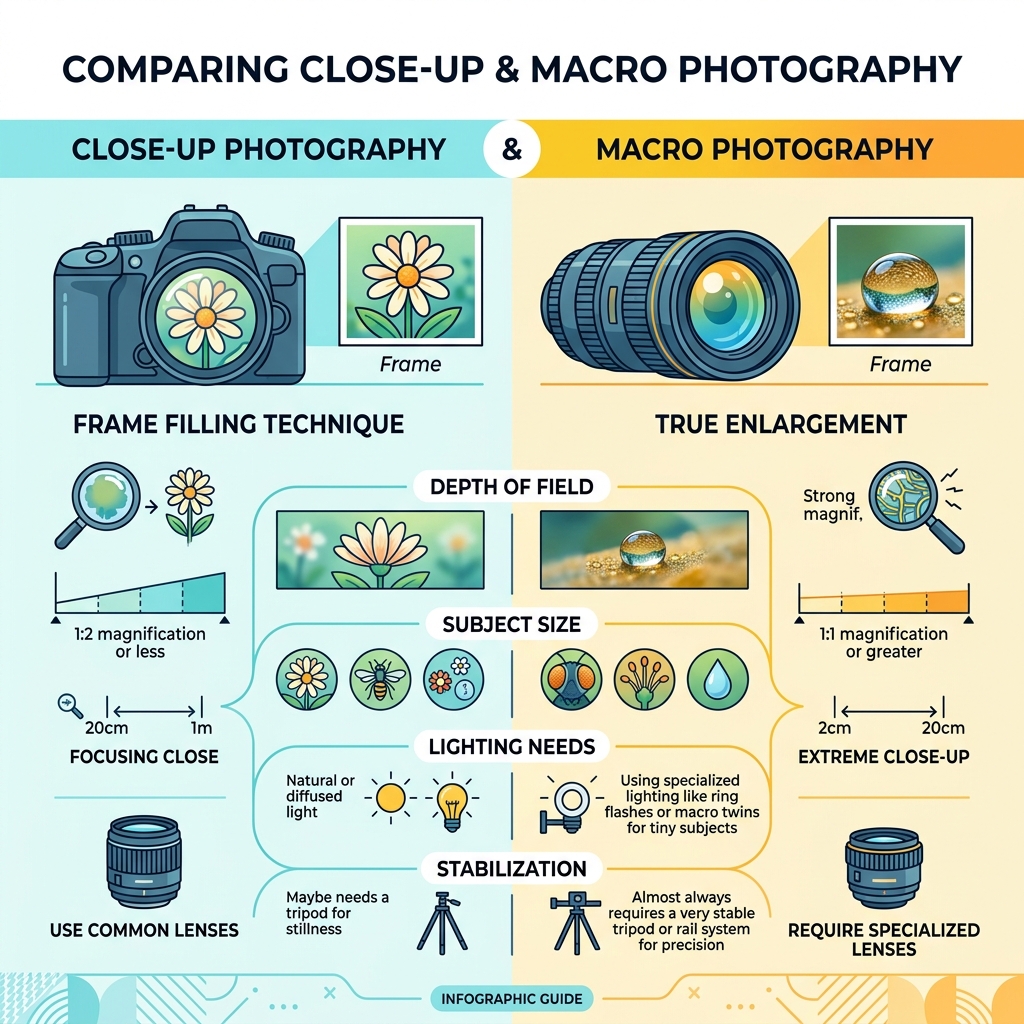
Core Principles of Close Up Composition Mastery
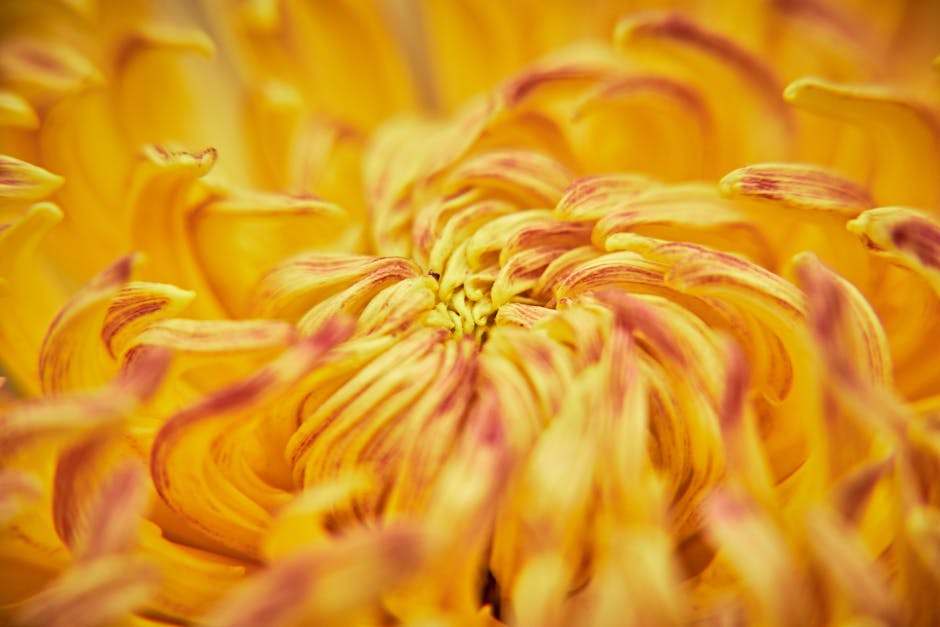
When we dive into the small, we often get distracted by the sheer technical challenge of getting things in focus. But focus is just the baseline. To achieve true close up composition mastery, we have to embrace the philosophy that “less is more.”
In a wide landscape, a stray trash can in the corner might be a nuisance. In a close-up, a single blade of grass out of place is a catastrophe. We like to think of composition as creating “our reality.” By cropping tightly, we remove the noise of the outside world and force the viewer to look at exactly what we want them to see. If you are shooting a vintage motorcycle, don’t just show the whole bike. Crop into the headlight, the curve of the handlebar, and the texture of the leather seat. This tells a more intimate story than a standard wide shot ever could.
Another core principle is the “big and small” contrast. To make a subject look massive, we crop it so tightly that it doesn’t even fit in the frame. Conversely, to make something look delicate and tiny, we place a larger, recognizable element beside it. This play on scale is a fundamental part of the science of visual perception in art, where our brains look for relative size to make sense of the world.
For those looking to build a solid foundation before narrowing their focus, we highly recommend checking out the-ultimate-guide-to-better-photo-composition/ to understand how these rules apply across all genres.
Achieving Depth with Close Up Composition Mastery
A common struggle in close-up work is the “flatness” that comes with using long focal lengths. Telephoto lenses are wonderful for compression, but they can accidentally suck the life out of a scene’s three-dimensionality.
To fix this, we use the “small-medium-large” technique. Look for shapes of the same type—like three dewdrops or three petals—and position them at varying distances from your lens. The brain perceives the largest one as closest and the smallest as farthest, instantly restoring depth.
We also suggest working in layers. A classic setup involves:
- Foreground: Keep this under 25% of the frame. It should be a soft blur that invites the viewer in.
- Middle Ground: This is where your subject lives.
- Background: This provides context but shouldn’t compete for attention.
If you’re out in the field trying to capture small subjects like birds or insects, your settings are just as vital as your eye. You can find specific advice on this in our guide on up-close-and-personal-camera-settings-for-close-up-bird-shots/.
Balancing Spacious vs Confined Framing
How much room does your subject need to breathe? This is a question of emotional resonance.
Spacious framing—often called using negative space—evokes feelings of peace, isolation, or vastness. If you place a tiny ladybug in the corner of a large, empty green leaf, you emphasize its solitude.
Confined framing, on the other hand, creates tension. By placing your subject right up against a wall or the edge of the frame, you make the viewer feel the pressure. It’s a fantastic tool for storytelling. When we are exploring-angles-and-perspectives-in-bird-photography/, we often use these framing choices to show the relationship between the creature and its environment.
Advanced Geometry and Leading Lines
Once we move past the basic Rule of Thirds, we enter the realm of advanced geometry. The Fibonacci spiral (or Golden Ratio) is a mathematical constant found throughout nature—from the curve of a nautilus shell to the arrangement of seeds in a sunflower.
Using this spiral in close up composition mastery allows for a more natural, fluid movement of the eye. Instead of the “static” feel that the Rule of Thirds can sometimes produce, the Golden Ratio creates a visual journey.
| Feature | Rule of Thirds | Golden Ratio (Phi Grid) |
|---|---|---|
| Structure | Equal 3×3 grid | Based on 1:1.618 ratio |
| Visual Feel | Stable, organized | Natural, balanced, dynamic |
| Best Use | Quick shots, landscapes | Portraits, complex close-ups |
| Eye Movement | Intersectional points | Spiral path to focal point |
Directing Attention with Close Up Composition Mastery
Leading lines aren’t just for roads and fences. In close-up photography, a leading line might be the vein of a leaf, the edge of a petal, or even an “implied line”—like the direction an insect is looking.
We also love the “frame within a frame” technique. You can use a hole in a piece of Swiss cheese, a gap between two flower stalks, or even a blurred foreground element to create a natural border around your subject. This directs the viewer’s eye exactly where it needs to go.
When dealing with multiple elements, always identify your primary and secondary subjects. The secondary subject should support the primary one, perhaps by mimicking its shape or pointing toward it. This is a subtle way to add complexity without creating chaos. For more on how to orient these frames, see our vertical-or-horizontal-framing-tips-for-bird-photography/.
Horizontal vs Vertical Orientations
Don’t just stick to the default way you hold your camera! Horizontal framing suggests stability and width, making it great for textures like bark or a row of pebbles. Vertical framing, however, implies height and power.
A pro tip for close up composition mastery: if you want to imply height in a horizontal frame, incorporate vertical lines that extend out of the top and bottom of the frame. This tricks the brain into imagining the rest of the subject’s height.
Enhancing Impact with Texture and Light
Light is the “paint” of photography, and in close-ups, it reveals the soul of the subject. While flat, overhead light is the enemy of detail, side-lighting and back-lighting are your best friends.
Back-lighting (or rim lighting) is particularly effective for subjects with “fuzz” or translucent edges—think of the tiny hairs on a bee or the delicate veins in a flower petal. It creates a glowing outline that separates the subject from the background.
Using Texture for Background Engagement
Texture adds a tactile quality to your images. When we look at a photo of weathered wood or a soft feather, our brains almost “feel” the surface. In close up composition mastery, we use texture to set the mood.
A background of smooth, out-of-focus water feels serene, while a background of jagged, sharp-edged rocks feels aggressive. We often suggest getting low to the ground to find these textures. If you’re shooting in a city, look for how nature interacts with man-made surfaces. You can learn more about this in our article on composing-bird-photos-with-urban-backgrounds/.
Mastering Reflections and Contrast
Shiny elements like water droplets, glass, or even a polished beetle’s back provide natural contrast. This is often more effective than pushing the contrast slider in post-processing.
When photographing water in a glass, look for “light logic.” A single light source (like a window) creates clean, realistic reflections. If you have too many light sources, the reflections become messy and look like “liquorice allsorts”—a jumbled pattern that confuses the eye.
Position your subject near dark window frames to create sharp, dark lines in the reflections. This adds a level of realism and “pop” that makes the image look three-dimensional.
Technical Execution and Micro-Composition
Mastery isn’t just about where you put things; it’s about the precision of that placement. This is where “micro-composition” comes in.
Micro-composition is the art of making tiny, millimeter-level adjustments to ensure that elements don’t overlap awkwardly. For example, if you’re shooting a flower, make sure the petals don’t “break” the horizon line of the background in a way that looks messy. Ensure that stems or stalks lead cleanly into the corners of the frame.
Avoiding Common Close-Up Mistakes
- Camera Shake: At high magnifications, even your heartbeat can cause blur. Use a tripod and a remote shutter release whenever possible.
- Background Clutter: A single bright spot in the background can ruin a masterpiece. Use a wide aperture (f/2.8 or f/4) to melt those distractions away.
- Overlapping Elements: If two insects are the subject, ensure they aren’t merged into one confusing blob. Wait for that “decisive moment” when they separate.
- Horizon Breaks: Avoid having a sharp line (like a table edge or the horizon) cutting right through the “head” of your subject.
For ultimate precision, we recommend learning how to use focus peaking for precision. This tool highlights the sharpest parts of your image in real-time, which is a lifesaver when working with a paper-thin depth of field.
The Power of Micro-Adjustments
Patience is a technical skill. Sometimes, close up composition mastery involves sitting in the dirt for 15 minutes waiting for the sun to shift just enough to highlight a specific texture.
Sam Abell, a legendary photographer, often practiced “composing and waiting.” He would find a perfect background and foreground, then wait for the subject to move into the “empty” space he had created. This prevents overlaps and ensures every element has its own breathing room.
Refining Your Vision in Post-Processing
Editing is the final stage of composition. We like to think of it as “polishing the diamond.” Even the best shots can usually benefit from a slight crop to remove a distracting element at the edge of the frame.
Cropping for Storytelling
Cropping is about clarifying your message. If the story is about the “intenseness” of a spider’s eyes, crop everything else out. If the story is about the spider’s place in the garden, leave more room.
Photography is not about capturing objective reality; it’s about evoking a mood. If a tight crop makes a small flower look like a giant alien landscape, you’ve succeeded. For more technical tips on this, read our crop-and-composition-editing-tips/.
Enhancing Texture and Detail
In post-processing, we can use “Local Adjustments” to make our composition stronger.
- Clarity and Texture: Increase these slightly on your subject to make it “pop.”
- Vignetting: A subtle dark border can help funnel the viewer’s eye toward the center of the frame.
- Color Grading: Use complementary colors (like a blue background for an orange insect) to create visual harmony.
Frequently Asked Questions about Close-Up Composition
How do I add depth when using a telephoto lens?
Since telephoto lenses compress the scene, you must rely on the “small-medium-large” technique. Place similar objects at different distances from the camera. The brain will interpret the difference in size as depth, even if the lens is trying to flatten the image.
What is the “less is more” approach in macro?
It means removing any element that doesn’t contribute to the story. In macro, the frame is so small that every pixel counts. If a leaf in the background is distracting, move it or crop it out. Show just enough to tell the story, and let the viewer’s imagination fill in the rest.
Why is manual focus preferred for close-ups?
At high magnifications, autofocus often “hunts” or fails to lock onto the exact spot you want (like the eye of a bee). Manual focus gives you total control. Many pros use “rocking focus”—setting the lens to a specific distance and then slowly moving their body back and forth until the subject is sharp.
Conclusion
At Ciber Conexão, we believe that close up composition mastery is a journey, not a destination. It’s about learning to see the world differently—to find the extraordinary in the ordinary.
By applying these principles of depth, geometry, and light, you transform a simple record of a subject into a visual journey. Don’t be afraid to experiment, break the rules, and make mistakes. Every shot you take is a step toward refining your artistic intent.
Ready to dive deeper into photography? You can master more photography tips right here on our blog. Happy shooting!
