
Essential Features of a compact camera for birds
When we look for the ideal compact camera for birds, we aren’t just looking for a “point-and-shoot.” Bird photography is perhaps the most demanding genre of photography because the subjects are small, fast, and often incredibly shy. To capture that stunning shot of a Cedar Waxwing or a Great Blue Heron, your camera needs a specific set of “superpowers.”
Zoom Range: The 600mm Benchmark
In birding, “reach” is king. Most professional bird photographers use massive 600mm lenses that cost as much as a small car. For a compact camera to be effective, it needs a focal length equivalent of at least 400mm, though we highly recommend 600mm or more. This allows you to frame the bird tightly without physically encroaching on its space and causing it to fly away.
Autofocus Speed and Tracking
Birds are, as some say, “erratic missiles.” A camera with slow contrast-detect autofocus will hunt back and forth while the bird has already moved on. We look for cameras with phase-detection autofocus and “Bird Eye AF.” This technology specifically recognizes the shape of a bird and locks onto the eye, ensuring the most important part of the image is tack-sharp.
Burst Shooting and Buffer
Capturing a wingbeat or a predator striking prey requires speed. We recommend a camera capable of at least 10 frames per second (fps). High-end models like the Sony RX10 IV can even hit 24fps. However, speed is useless if the camera’s “buffer” (internal memory) fills up after two seconds. A deep buffer allows you to hold the shutter down during a long action sequence without the camera freezing to “breathe.”
Image Stabilization
When you are zoomed in at 600mm or 2000mm, even the tiniest hand tremor looks like an earthquake. High-quality optical image stabilization is essential for handheld shooting, especially in the lower light of a forest canopy.
For more on how to manage these technical aspects, check out our guide on Mastering Camera Settings for Bird Photography and learn How to Freeze Motion with the Best Shutter Speed for Flying Birds.

Top-Rated Superzoom Models for Every Birder
Choosing a camera often comes down to the trade-off between sensor size and zoom reach. A 1-inch sensor is about four times larger than the standard 1/2.3-inch sensor found in many budget compacts. This larger surface area means better image quality and less “noise” in low light, but it usually means a shorter zoom range to keep the camera portable.
| Camera Model | Sensor Size | Max Zoom (Eq.) | Weight |
|---|---|---|---|
| Sony RX10 IV | 1-inch | 600mm | 1095g |
| Nikon P950 | 1/2.3-inch | 2000mm | 1005g |
| Nikon P1000 | 1/2.3-inch | 3000mm | 1415g |
| Canon SX70 HS | 1/2.3-inch | 1365mm | 610g |
| Panasonic FZ80 | 1/2.3-inch | 1200mm | 616g |
If you are looking for a balance of power and portability, the Nikon COOLPIX P950 Black | Point & Shoot Cameras | Nikon USA is a fantastic middle-ground option with a staggering 2000mm reach.
Why the Sony RX10 IV is the Best compact camera for birds
Ask any serious travel birder about their favorite “all-in-one,” and they will likely point to the Sony RX10 IV. It is the undisputed king of bridge cameras. Why? Because it borrows the “brains” from Sony’s professional mirrorless line.
It features a 24-600mm f/2.4-4 Zeiss Vario-Sonnar T* lens that is incredibly sharp across the entire range. With 315 phase-detect AF points covering 65% of the frame, it can track a swallow in flight with ease. The 24fps burst mode with full autofocus tracking means you never miss the decisive moment. While it’s a bit of a “chonker” compared to a pocket camera, it’s a featherweight miracle compared to a DSLR with a 600mm lens. It’s the ultimate choice for Lightweight Bird Photography Gear without sacrificing professional results.
Budget-Friendly compact camera for birds Options
You don’t need to spend $1,500 to start enjoying bird photography. For those seeking Affordable Cameras for Urban Birding, there are excellent value picks.
The Panasonic Lumix FZ80 is often available for under $300. It offers a 60x zoom (1200mm equivalent) and 4K video capabilities. While its small sensor struggles in deep shade, it’s a powerhouse in bright sunlight. Another great contender is the Canon PowerShot SX70 HS, which offers a 65x optical zoom and a very user-friendly menu system that Canon is famous for. It’s a great entry point for beginners who want massive reach in a lightweight package.
Extreme Reach: The Nikon Coolpix P-Series
If your goal is to photograph a bird on the other side of a lake—or even craters on the moon—Nikon’s P-series is in a league of its own. The Nikon Coolpix P1000 features a “pandemic-sized” 125x optical zoom, reaching a 3000mm equivalent.
The newer COOLPIX P1100 continues this legacy of “telescope-in-a-box” technology. While these cameras are larger and the autofocus is slightly slower than the Sony, the sheer magnification is unmatched. You can capture feather-level detail on birds that are barely visible to the naked eye.
Specialized Gear: Feeder Cams and Monoculars
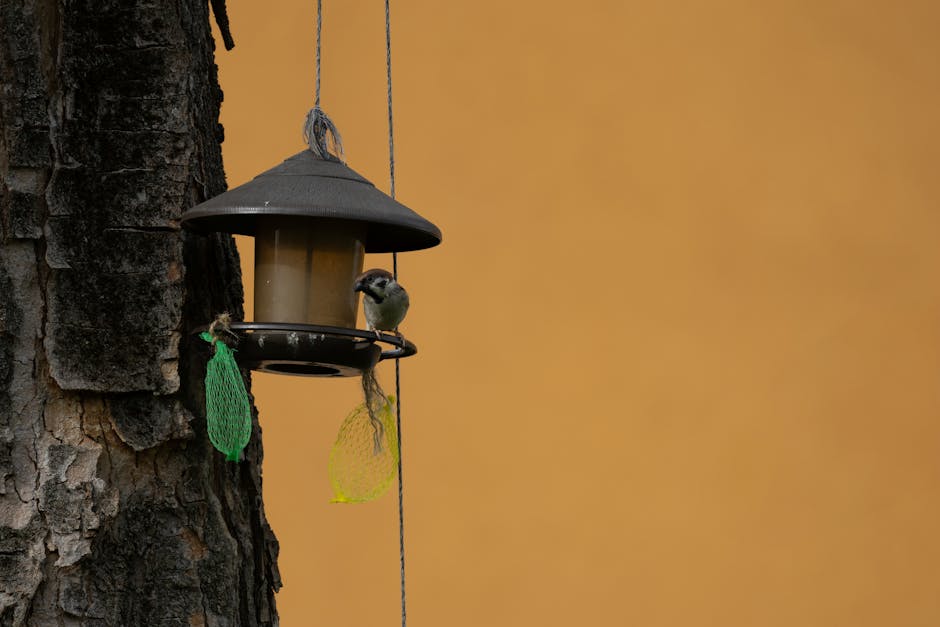
Sometimes the best way to see birds is to let them come to you. Smart bird technology has exploded recently, offering ways to see birds closer than ever before.
Smart Feeder Cameras
Devices like the hiBirdie Cam and the Hibird DIY 4K Smart Bird Watching Camera are revolutionizing backyard birding. These aren’t just cameras; they are AI-powered observers. They feature 4K lenses and motion sensors that trigger the moment a bird lands. Using AI, they can identify over 11,000 species with high accuracy and send a notification directly to your phone. It’s a wonderful way to engage children or simply enjoy the “secret life” of your local birds while you’re at work.
The Monocular Hybrid: Canon PowerShot ZOOM
For the hiker who wants to carry absolutely nothing but still wants a closer look, the Canon PowerShot ZOOM is a unique hybrid. It looks like a small monocular but acts as a 12MP camera. It features a 3-step zoom (100mm, 400mm, and 800mm digital) and is small enough to fit in a shirt pocket. It’s perfect for discreet spotting or “record shots” to identify a rare bird for your life list.
Micro Four Thirds: The Professional Compact Alternative
If you want the portability of a compact but the image quality of a professional system, the Micro Four Thirds (MFT) sensor is your best friend. The OM-1 Mark II – Perfect birding camera and more | OM SYSTEM is a beast of a camera.
Because the sensor is smaller than “Full Frame,” the lenses are also much smaller and lighter. A 300mm lens on this system gives you the same reach as a 600mm lens on a DSLR. It features computational photography tricks like “ProCapture,” which starts recording images the moment you half-press the shutter—meaning if you’re a split-second late to a bird taking flight, the camera has already saved the shot for you.
Maximizing Success with Fieldcraft and Settings
Having a great compact camera for birds is only half the battle. The other half is how you use it. Even the best gear can produce “blurry smudges” if the settings are wrong.
Fieldcraft: The Secret Ingredient
No amount of zoom can replace getting closer. We always recommend practicing good fieldcraft: move slowly, avoid sudden gestures, and use natural cover. Sometimes, staying still and letting the bird come to you is more effective than a 3000mm lens. For those just starting out, our Getting Started with Bird Photography: A Guide for Beginners is an essential read.
Essential Settings for Success
- Shoot in RAW: If your camera supports it, shoot in RAW format. This gives us more data to work with when we help you edit your photos later.
- Shutter Priority (S or Tv): For birds, you usually want a fast shutter speed (at least 1/1000s or 1/2000s for small songbirds).
- Auto ISO: Birds move from bright sun to deep shade instantly. Let the camera handle the ISO while you focus on the action.
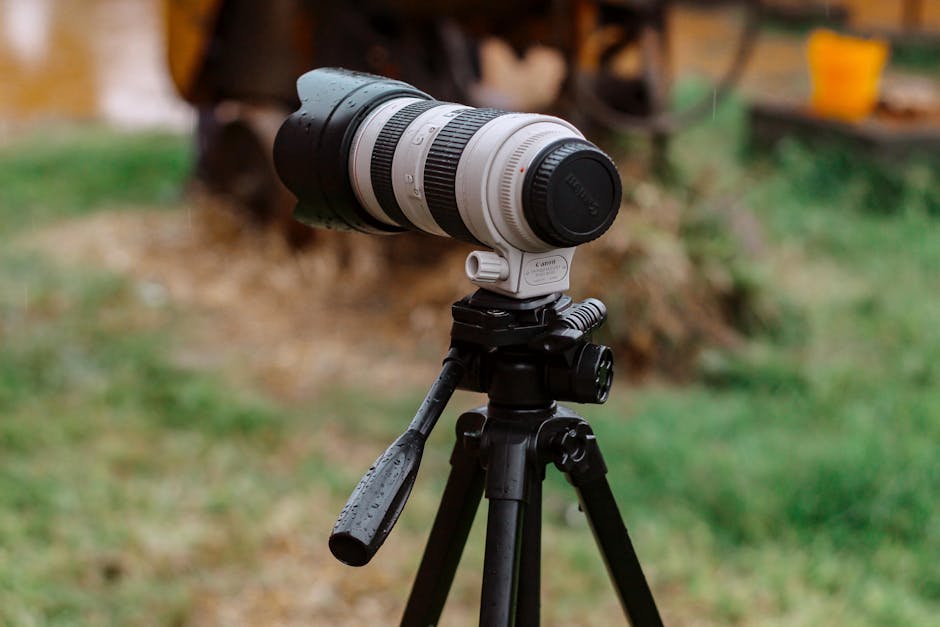
- Support Your Gear: Even with stabilization, a lightweight monopod can make a world of difference at long focal lengths. Check out our list of Beginner-Friendly Camera Accessories for more ideas.
Frequently Asked Questions about Compact Birding Cameras
Is a 1-inch sensor necessary for bird photography? While not strictly “necessary,” a 1-inch sensor (like in the Sony RX10 IV) offers a significant jump in image quality. It allows for more cropping in post-production and performs much better in the low-light conditions often found in forests. If your budget allows, it is usually worth the extra $200-$400.
Can compact cameras capture birds in flight? Yes, but with a caveat. “Birds in flight” (BIF) photography is the hardest skill to master. Cameras with phase-detection autofocus (like the Sony RX10 IV or the OM-1 Mark II) are significantly better at this than budget models that use contrast-detection.
How do I get sharp shots at maximum zoom? The “Rule of Reciprocals” suggests your shutter speed should match your focal length. If you are at 2000mm, you need a very fast shutter speed or a tripod. Also, be aware of “heat haze”—on hot days, the air between you and a distant bird can shimmer, making images look soft regardless of your camera’s quality.
Conclusion
At Ciber Conexão, we believe that the best camera is the one you actually have with you. For many of us, that means a compact camera for birds that fits in a small bag rather than a giant hard case.
Whether you choose the professional-grade speed of the Sony RX10 IV, the astronomical reach of the Nikon P1000, or the convenience of a smart feeder cam, the goal is the same: to connect with nature and capture its beauty.
Once you’ve captured those shots, the real magic happens in the editing. Our founder, Hugo Andrade, specializes in showing you how to take a “good” bird photo and make it “great” through expert crop and composition techniques. Sometimes, the difference between a throwaway shot and a portfolio piece is just a 10% crop and a slight adjustment to the framing.
Ready to dive deeper into photography? Explore our Category: Gear for more reviews and tips to elevate your birding game. Happy shooting!
